How Portable Biochar Kilns Are Revolutionizing On-Farm Carbon Sequestration
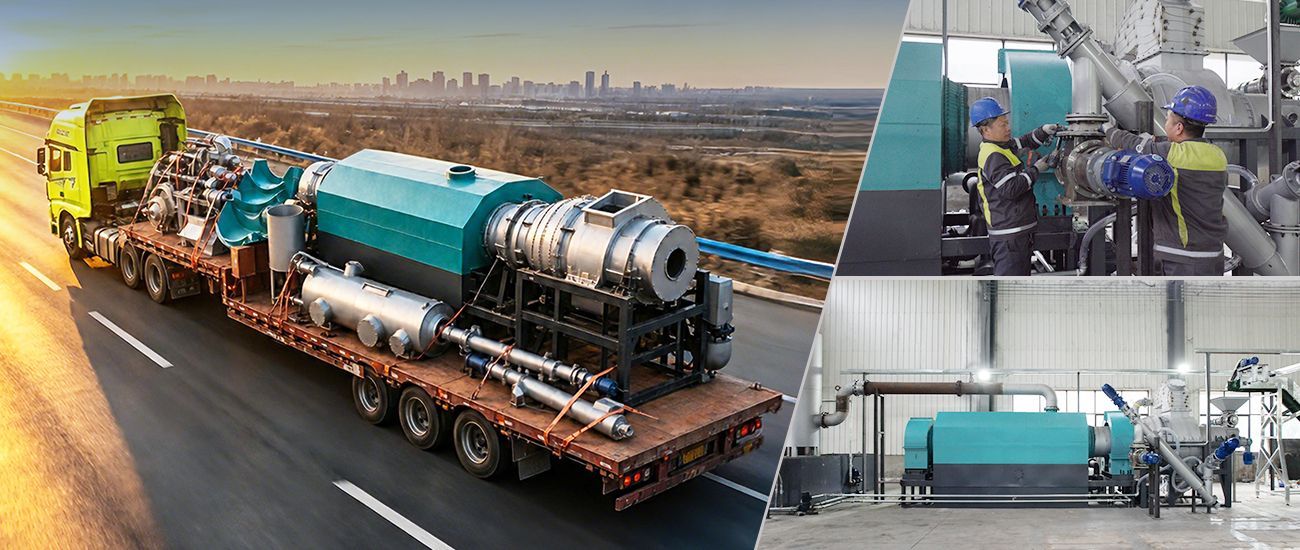
Agricultural residues are often treated as low-value by-products, yet materials such as pruning branches, nut shells, straw, and other woody biomass contain substantial quantities of carbon. A portable biochar kiln provides farmers with a practical way to convert these residues into stable carbon-rich biochar directly near the point of generation. This localized approach reduces unnecessary biomass transport while creating a material that can be returned to soil or used in other agricultural applications.
Bringing Carbon Conversion Closer to the Farm
Conventional biomass processing can require centralized facilities, dedicated transportation, and substantial material handling. For farms with dispersed fields or seasonal residues, these requirements may undermine the economic feasibility of carbon management.
A portable biochar kiln changes this logistical equation. Its mobility allows the equipment to be positioned close to orchards, plantations, forestry plots, or crop-production areas where biomass accumulates. Instead of hauling bulky, low-density residues over long distances, operators can process feedstock nearer to its source.
This is particularly relevant for pruning residues. Orchard maintenance can generate large volumes of branches within a limited harvesting period. Converting this material on-site reduces transportation requirements and transforms an agricultural liability into a carbon-rich product.
Pyrolysis Converts Residues into Stable Carbon
The underlying principle is controlled thermal decomposition under oxygen-limited conditions. During pyrolysis, biomass is heated while excessive oxygen exposure is restricted. Volatile compounds are released, while part of the original carbon becomes concentrated in a relatively stable solid fraction.
The resulting biochar differs fundamentally from untreated biomass. Its carbon structure is more resistant to rapid biological decomposition, which allows a portion of the carbon to remain in soil for considerably longer periods than fresh plant residues.
For carbon-sequestration projects, however, the kiln itself is only one component of the equation. Feedstock characteristics, operating temperature, residence time, biochar properties, and measurement procedures all influence the eventual carbon-removal performance.
A More Decentralized Carbon-Removal Model
Farm-scale biochar production introduces a decentralized model for agricultural carbon management. Rather than transporting biomass to a distant processing facility, the conversion step can occur close to the feedstock.
This creates several potential advantages:
- Lower biomass transportation demand: Processing near the source can reduce the movement of bulky residues.
- Better residue utilization: Agricultural by-products can become a usable soil amendment instead of remaining unmanaged.
- Carbon retention: A fraction of biomass carbon is transformed into a more persistent form.
- Soil-management potential: Properly characterized biochar may contribute to soil structure, water retention, and nutrient-management strategies.
- Operational flexibility: A mobile unit can be relocated according to seasonal biomass availability.
The significance extends beyond individual farms. When replicated across multiple agricultural operations, decentralized biochar production can form a distributed carbon-removal network.
Matching the Portable Biochar Kiln to Farm Conditions
Not every farm has the same feedstock or operating environment. A suitable portable biochar kiln should therefore be evaluated according to biomass type, moisture content, particle dimensions, expected throughput, available energy sources, and local operating conditions.
Feedstock preparation deserves particular attention. Excessive moisture can increase thermal energy requirements, while inconsistent particle size may affect heat transfer and conversion uniformity. A well-defined feedstock specification helps stabilize operation and produce biochar with more predictable characteristics.
Carbon accounting also requires discipline. If biochar is intended for a certified carbon-removal project, documentation should cover feedstock origin, processing parameters, biochar quantity, carbon content, and the eventual application pathway. Measurement, reporting, and verification are essential for distinguishing genuine carbon removal from simple biomass disposal.
From Agricultural Residue to Long-Term Carbon Storage
The real innovation of portable biochar technology is not simply its compactness. It is the ability to integrate biomass management, thermal conversion, and carbon sequestration closer to where agricultural residues are produced.
As farms pursue lower-emission production systems, the portable biochar kiln can serve as a bridge between residue management and durable carbon storage. Its value lies in turning a geographically dispersed biomass resource into a measurable carbon-management opportunity—while potentially generating a useful agricultural product at the same time.