UK's Tyre Landfill Ban: Why a Pyrolysis Plant Is Becoming the Practical Answer
Cathy Wang • September 29, 2026

Every year, Britain's roads consume tens of millions of tyres. When they wear out, they become one of the country's most persistent waste streams: bulky, durable, and difficult to recycle. Industry estimates put UK end-of-life tyre (ELT) arisings at roughly 500,000 tonnes a year. With landfill closed to them, how that material is handled has become a defining question for the recycling sector.


The Tyre Landfill Ban: What Changed

The UK has not banned landfill in general. Many wastes can still be landfilled, subject to permits and Landfill Tax. Tyres, however, are a specifically restricted category. Whole tyres were banned from landfill in 2003, and shredded tyres followed in 2006.


The reasoning was sound. Tyres trap gases, tend to work their way up through landfill layers, and consume valuable void space. Stockpiles are just as problematic: tyre fires are notoriously hard to extinguish and release harmful emissions.


With landfill off the table, ELTs have followed three main routes: material recovery (crumb and granulate for surfacing and infrastructure), energy recovery (chiefly cement kilns and tyre-derived fuel), and export. Each has limits. Crumb markets are finite, energy recovery does little to keep materials in circulation, and exporting shifts environmental responsibility overseas at a time when regulators and customers are asking tougher questions about where waste ends up.


Enter Pyrolysis

Pyrolysis heats shredded tyres in an oxygen-free reactor, breaking them down thermally rather than burning them. The process yields three principal outputs: pyrolysis oil, recovered carbon black (rCB), and steel wire. It also produces a non-condensable syngas, which is typically recycled to heat the reactor.


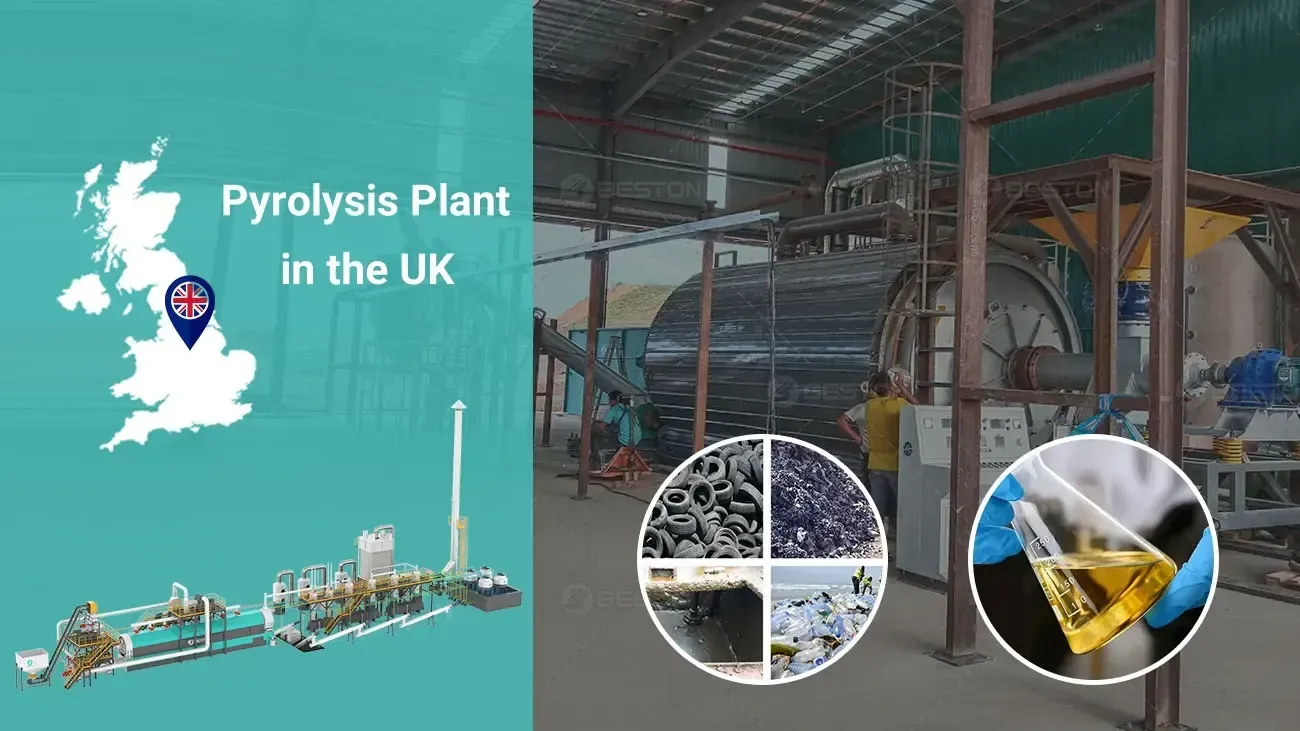
This is why interest in the pyrolysis plant UK operators can deploy is rising. Pyrolysis converts a low-value, hard-to-handle waste into several marketable products, and it can process feedstock that is unsuitable for mechanical recycling. Because the syngas can supply much of the process heat, well-designed plants can be reasonably energy self-sufficient once running.


Where the Value Lies

Carbon black. Recovered carbon black is arguably the most strategically important product. Tyre and rubber manufacturers face growing pressure to increase recycled content, and rCB offers a lower-carbon alternative to virgin carbon black made from fossil feedstocks. The challenge is consistency: buyers need tightly specified material, so post-processing and quality control are critical.


Pyrolysis oil. The oil can be used as an industrial fuel or upgraded as a petrochemical feedstock. Access to premium markets depends on refining and on regulatory clarity about when the material stops being classed as waste.


Steel. Recovered steel is easy to sell into established scrap markets and adds useful secondary revenue.


Challenges Developers Must Address

The opportunity is real, but so are the hurdles:

  • Permitting. Thermal treatment facilities need environmental permits, and regulators scrutinise emissions controls, abatement systems, and monitoring closely. Early engagement with the environmental regulator and local planning authority is essential.
  • Feedstock security. Reliable, contracted tyre supply at predictable cost underpins any business case. Relationships with collectors and processors matter as much as reactor design.
  • Product specification. Offtake agreements for oil and carbon black should be pursued early, with clear quality standards.
  • Community acceptance. Thermal technologies attract public scrutiny. Transparent communication about emissions, traffic, and safety builds trust.
  • Technology choice. Batch, semi-continuous, and continuous systems differ significantly in throughput, maintenance demands, and capital cost. Independent due diligence on reference plants is well worth the investment.


Policy Tailwinds

Broader trends favour recycling routes that return materials to the economy. Resource-efficiency goals, continuing discussion of producer responsibility approaches for tyres, and industry commitments to recycled content all point toward growing demand for verified, traceable secondary materials. Tyre manufacturers and fleet operators increasingly want demonstrable end-of-life solutions, and pyrolysis can offer a credible story when supported by robust carbon accounting and certification.


Looking Ahead

The tyre landfill ban solved one problem and created another: what to do with half a million tonnes of durable, high-energy material each year. Pyrolysis offers a technically proven answer, but success depends on execution. That means disciplined feedstock sourcing, realistic financial modelling, high-quality outputs, and open engagement with regulators and communities.


For investors, waste operators, and technology providers, the message is encouraging. As the UK tightens its approach to waste and raises its circular-economy ambitions, a well-run pyrolysis plant UK projects can build is well placed to turn a regulatory constraint into a durable commercial opportunity.
By Cathy Wang • September 29, 2026
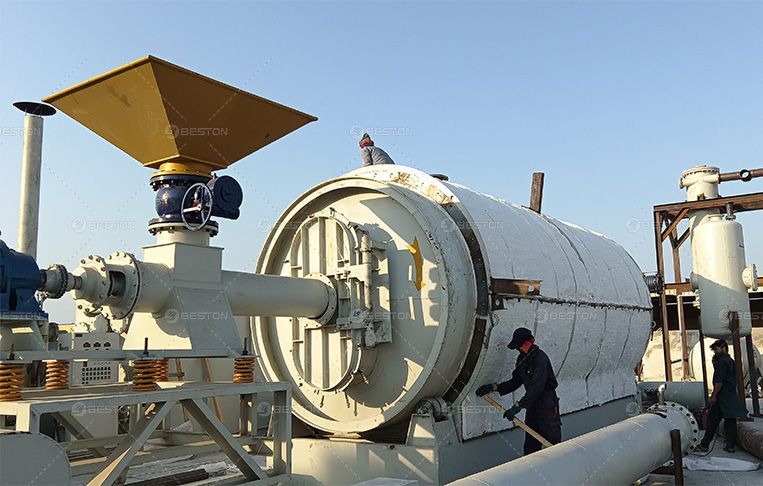
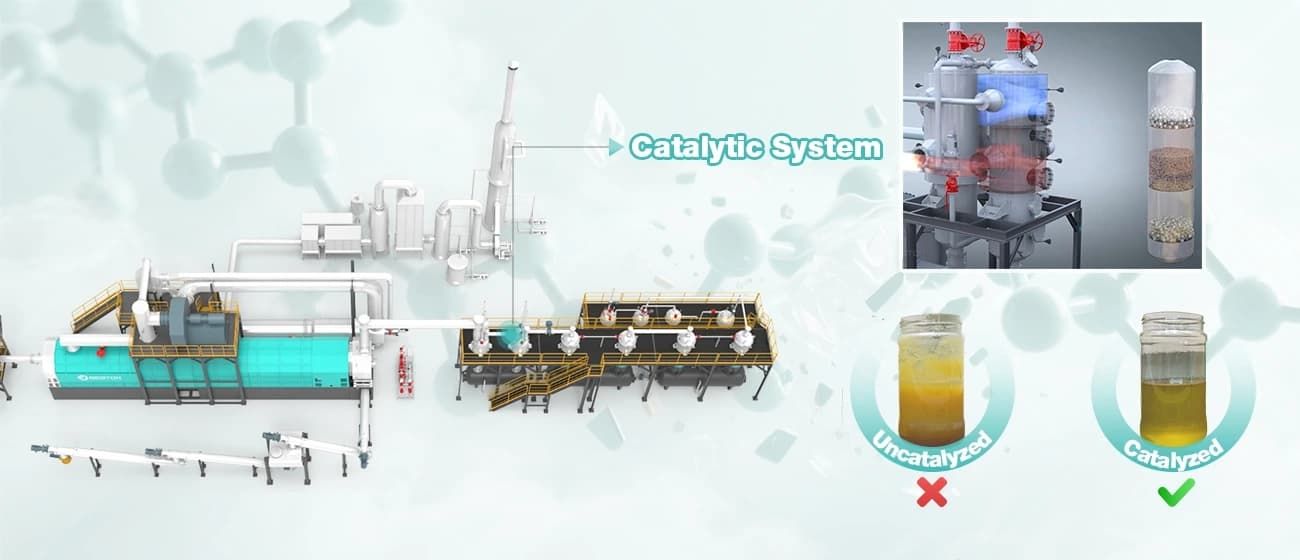
The performance of a plastic pyrolysis system is often evaluated by production capacity and energy efficiency. However, product quality remains equally important. In a commercial operation, the composition and consistency of pyrolysis oil, combustible gas, and solid residues determine the potential value of the final products and influence downstream applications. For investors exploring a plastic to oil machine for sale , understanding the factors that affect product quality is essential for making informed technical and economic decisions. Feedstock Composition Determines Product Characteristics Plastic feedstock is the primary variable influencing pyrolysis output. Different polymers exhibit distinct thermal decomposition pathways, resulting in variations in oil composition, gas yield, and solid residue formation. Polyolefin materials such as polyethylene (PE) and polypropylene (PP) generally produce higher liquid yields because their molecular structures favor hydrocarbon generation during pyrolysis. Polystyrene (PS) can generate aromatic compounds, while plastics containing chlorine, oxygen, or other heteroatoms may require additional process control due to the formation of undesirable by-products. Feedstock purity is equally important. Metal fragments, dirt, moisture, and non-target materials can alter thermal behavior and affect the consistency of products. A stable and well-prepared feedstock stream contributes to more predictable operation and product quality. Temperature Control Influences Product Distribution Pyrolysis is fundamentally a temperature-driven process. Reactor temperature affects the extent of polymer cracking and determines the relative proportion of liquid, gas, and solid products. Lower temperatures may lead to incomplete decomposition and higher residue content. Excessively high temperatures, by contrast, can promote secondary cracking reactions, converting condensable hydrocarbons into permanent gases. Maintaining a suitable temperature window allows the system to balance liquid production with gas generation. Temperature uniformity is equally significant. Thermal gradients within the reactor can create heterogeneous reaction zones, leading to fluctuations in product composition. Continuous monitoring and automated control systems help maintain stable operating conditions. Residence Time and Vapor Management The duration that plastic and pyrolysis vapors remain inside the reactor also affects final products. Longer residence times can increase secondary reactions, altering hydrocarbon distribution and reducing the proportion of heavier liquid fractions. Vapor handling systems therefore play an important role. Efficient condensation equipment enables the recovery of condensable hydrocarbons while separating non-condensable gas for energy utilization. The design of condensers, cooling systems, and gas pipelines influences heat transfer efficiency and can affect the composition of collected oil. Insufficient cooling may result in the loss of valuable hydrocarbons, while excessive cooling can increase operational complexity. Role of Non-Condensable Gas Non-condensable gas generated during pyrolysis contains combustible components that can contribute to process heating after suitable treatment. This internal energy circulation reduces dependence on external fuel sources and improves thermal efficiency. Gas composition depends on feedstock type, reactor temperature, and operating conditions. Hydrogen, methane, and light hydrocarbons may be present in varying proportions. Their effective utilization can improve overall energy management within the plant. For buyers comparing a plastic to oil machine for sale , the ability to recover and utilize process gas should be considered alongside reactor design and production capacity. Formation and Management of Solid Residues Solid residues represent the non-volatile fraction remaining after thermal decomposition. Their quantity and characteristics are affected by feedstock composition, operating temperature, and process stability. In plastic pyrolysis, residue may contain carbonaceous material, inorganic additives, pigments, fillers, and traces of contaminants. Excessive residue generation can indicate incomplete conversion or unsuitable feedstock preparation. Residue handling systems therefore form an important part of plant design. Efficient discharge and collection support continuous operation while reducing maintenance requirements. Integrating Quality Control into Plant Operation Product quality does not depend on a single parameter. It results from the interaction of feedstock preparation, temperature management, residence time, vapor recovery, and residue control. For companies evaluating a plastic to oil machine for sale , technical assessment should extend beyond nominal production capacity. Feedstock compatibility, thermal stability, condensation efficiency, gas utilization, and residue management all influence the consistency and value of final products. A well-designed pyrolysis system combines these elements into an integrated process. Stable operation, controlled reaction conditions, and effective product recovery can improve the quality of oil, gas, and solid residues while supporting more efficient resource utilization from plastic waste.
By Cathy Wang • September 23, 2026
Municipal and industrial wastewater treatment facilities generate large volumes of sludge as a by-product of purification processes. This material often contains organic matter, moisture, inorganic minerals, and trace contaminants, making disposal both technically challenging and economically significant. Traditional management methods, such as landfilling, incineration, and direct land application, are increasingly influenced by environmental regulations, transportation costs, and resource-recovery objectives. Against this background, sewage sludge pyrolysis has emerged as a thermochemical pathway that converts sludge into carbon-rich products while reducing waste volume. Characteristics of Sewage Sludge as a Feedstock Sewage sludge differs substantially from conventional biomass feedstocks. Moisture content is often high, and ash concentrations can vary depending on wastewater composition and treatment processes. In addition, sludge may contain nutrients, metals, inorganic compounds, and residual organic substances. These characteristics influence thermal behavior during pyrolysis. Feedstock preparation therefore becomes an important step. Mechanical dewatering, thermal drying, and particle-size homogenization can improve process stability and reduce unnecessary energy consumption. The selection of pretreatment methods depends on sludge properties, local infrastructure, and the intended application of the final carbon product. Thermal Conversion Through Sewage Sludge Pyrolysis Pyrolysis involves heating organic material under oxygen-limited conditions, allowing thermal decomposition to occur without complete combustion. During sewage sludge pyrolysis , complex organic compounds are transformed into three principal fractions: Carbon-rich solid products; Condensable liquids; Non-condensable gases. The distribution of these products depends on reactor temperature, heating rate, residence time, and feedstock composition. Compared with direct incineration, pyrolysis emphasizes resource recovery alongside waste reduction. Organic carbon is retained partially within the solid product, while combustible gases can contribute to process heating after appropriate treatment. The process also reduces sludge volume significantly, thereby lowering transportation and disposal requirements. Reactor and Equipment Considerations Sludge processing requires equipment designed to accommodate feedstocks with varying moisture levels, particle characteristics, and ash content. A sludge pyrolysis system generally includes: Feedstock pretreatment equipment; Drying units; Thermal conversion reactor; Condensation system; Gas-utilization section; Solid-product cooling system; Emission-control equipment. The reactor is the core component. Rotary kilns, screw reactors, and other indirectly heated systems are frequently used because they provide controlled material movement and stable heat transfer. Temperature management is essential. Excessive temperatures can reduce solid-product yield, while insufficient thermal input may result in incomplete conversion. Process automation and instrumentation help maintain stable operating conditions. Carbon Products and Resource Recovery One of the key outcomes of sewage sludge pyrolysis is the generation of carbon-containing solids. Depending on feedstock composition and processing conditions, these materials may contain fixed carbon, mineral matter, and nutrient elements. Potential applications vary according to product quality, local regulations, and technical requirements. In some contexts, carbon products may be considered for industrial applications, construction materials, or further upgrading processes. Comprehensive characterization is necessary before determining suitable end uses. The gaseous fraction also has value. After purification and controlled combustion, non-condensable gas can provide part of the thermal energy required for the pyrolysis process. This internal energy loop may improve overall thermal efficiency. Emission Control and Environmental Considerations Sludge treatment technologies must address emissions carefully. Pyrolysis systems therefore require integrated gas cleaning and environmental control measures. Dust removal, condensation, thermal oxidation, and exhaust-gas treatment may be incorporated depending on process design and regulatory requirements. Continuous monitoring of temperature, pressure, and emissions can further improve operational reliability. Attention should also be given to the management of inorganic residues and potential contaminants. Product testing remains essential to ensure that recovered materials meet applicable standards. From Waste Management to Carbon Resource Utilization The concept behind sewage sludge pyrolysis extends beyond disposal. Instead of treating sludge solely as a waste stream, pyrolysis views it as a source of carbon, energy, and potentially useful materials. A complete process chain—comprising dewatering, drying, thermal conversion, gas utilization, product cooling, and emission control—can transform complex sludge streams into more stable products while reducing waste volume. As wastewater treatment facilities seek more circular resource-management strategies, sludge pyrolysis machines provide a technological pathway that links waste reduction, energy recovery, and carbon-product generation within a single thermochemical system.
By Cathy Wang • September 22, 2026
Thermal desorption is widely used to treat oily wastes and recover hydrocarbons from contaminated solids. However, not all oily waste behaves the same way during thermal treatment. Tank bottom sludge, refinery sludge, and drilling waste can have very different moisture levels, hydrocarbon contents, particle characteristics, and inorganic compositions. These differences directly affect how a thermal desorption unit (TDU) should be configured. Choosing equipment based only on daily processing capacity can lead to inefficient heating, unstable feeding, excessive energy consumption, or difficulties with downstream vapor treatment. Understanding the feedstock is therefore one of the first steps in designing an appropriate TDU system. 1. Tank Bottom Sludge: High Hydrocarbon Variability Tank bottom sludge accumulates at the bottom of crude oil, fuel, and other hydrocarbon storage tanks. It typically contains a mixture of hydrocarbons, water, sediment, rust, and other solid contaminants. Its composition can vary considerably depending on the stored material, tank operating history, and cleaning method. Some tank bottoms may contain a relatively high proportion of recoverable hydrocarbons, while others may contain large amounts of water and inorganic solids. For a TDU system, this variability makes feedstock analysis particularly important. The heating system must provide sufficient energy to remove water and hydrocarbons without unnecessarily increasing the treatment temperature. Feed handling is also important because sticky sludge can be difficult to transport. Mixing, dewatering, or other pretreatment may be required depending on its physical condition. 2. Refinery Sludge: More Complex Contaminants Refinery sludge can originate from crude oil processing, wastewater treatment, separators, storage facilities, and other refinery operations. Its composition may include hydrocarbons, water, catalysts, mineral solids, and other process-related contaminants. Because refinery sludge can come from different sources within the same facility, its properties may vary from one stream to another. A thermal desorption unit designed for refinery sludge may therefore require greater flexibility in temperature control, feeding, vapor condensation, and gas treatment. Corrosive compounds should also be considered when selecting equipment materials and downstream components. For larger projects, separating different sludge streams before treatment can make process control easier and provide more predictable operating conditions. 3. Drilling Waste: Water and Solids Become Critical Drilling waste, including oil-based drilling cuttings, has a different physical structure from many tank or refinery sludges. It can contain rock cuttings, drilling fluids, oil, water, and various additives. The solid content can be relatively high, and particle size may vary significantly. This affects feeding, heat transfer, and residence time inside the thermal treatment equipment. Moisture is another major consideration. If drilling waste contains substantial water, a significant portion of the thermal energy supplied to the system may be consumed by water evaporation. The TDU design therefore needs to account for both the hydrocarbon removal target and the energy required to heat and evaporate the water fraction. 4. Feedstock Changes the Heating Requirement One of the most important differences among these feedstocks is moisture content. Water requires substantial energy to heat and vaporize. Two systems processing the same mass of waste can therefore have very different energy requirements if their moisture levels differ. Hydrocarbon content also affects the thermal balance. Volatile hydrocarbons released during treatment can be recovered through condensation, while non-condensable gases may potentially be used as part of the plant's heating system, depending on their composition and system design. Consequently, the TDU should be sized according to the actual feed composition rather than simply using tons per day as the only design parameter. 5. Feeding and Material Handling Need to Match the Waste Physical characteristics can be just as important as chemical composition. Sticky tank sludge may require specialized feeding equipment. Refinery sludge may need mixing to maintain a relatively uniform feed. Drilling cuttings may require conveyors or other solids-handling equipment capable of dealing with abrasive particles. Pretreatment can also influence overall plant performance. Removing excess water, breaking up large particles, or homogenizing the feed can improve heat transfer and make the thermal process more stable. 6. Vapor and Condensation Systems May Differ The composition of vapors released during thermal treatment depends on the feedstock. A hydrocarbon-rich sludge may generate substantial quantities of condensable oil vapors. Water-rich waste can produce a significant water vapor load. Other contaminants may require additional gas cleaning or treatment. The condenser, oil-water separation system, non-condensable gas handling, and emission-control equipment should therefore be designed around the expected vapor composition. This is particularly important when different waste streams are expected to be processed in the same TDU. A system designed around one feedstock should not automatically be assumed to perform identically with another. 7. Reactor Material and Wear Also Matter Feedstock can influence equipment durability. Drilling waste containing abrasive mineral particles may create greater mechanical wear than relatively soft sludge. Certain refinery and tank-bottom wastes may contain corrosive compounds that require appropriate material selection. The reactor, feeding equipment, conveyors, seals, and other components should therefore be evaluated according to both chemical and mechanical conditions. 8. A Feedstock-Based TDU Design Approach Before selecting a thermal desorption unit, operators should collect representative feedstock data, including: Moisture content Oil and hydrocarbon content Solid content Particle size Density Salt and mineral content Potentially corrosive compounds Daily and seasonal volume variations This information can then be used to determine heating capacity, reactor throughput, residence time, feeding requirements, condensation capacity, and gas-treatment needs. Conclusion Tank bottom sludge, refinery sludge, and drilling waste may all be described as oily wastes, but they can behave very differently during thermal treatment. Tank bottom sludge often presents variability in hydrocarbon and sediment content, refinery sludge can contain complex mixtures of process contaminants, and drilling waste can introduce significant water, solids, and abrasion considerations. For this reason, a thermal desorption unit should be designed around the specific characteristics of the feedstock. A successful TDU setup is not simply a matter of selecting the largest available capacity—it requires matching the heating system, feeding equipment, reactor configuration, condensation system, and emission controls to the waste being processed.