Plastic to Oil Machine Product Quality: Factors Affecting Oil, Gas, and Solid Residues
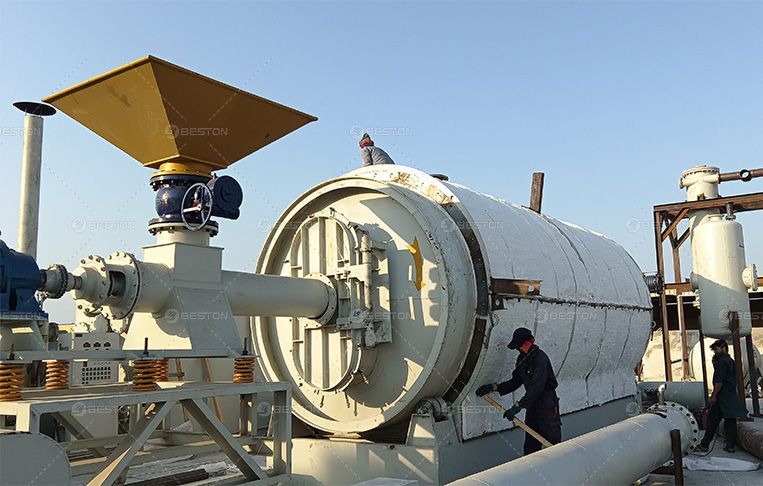
The performance of a plastic pyrolysis system is often evaluated by production capacity and energy efficiency. However, product quality remains equally important. In a commercial operation, the composition and consistency of pyrolysis oil, combustible gas, and solid residues determine the potential value of the final products and influence downstream applications. For investors exploring a plastic to oil machine for sale, understanding the factors that affect product quality is essential for making informed technical and economic decisions.
Feedstock Composition Determines Product Characteristics
Plastic feedstock is the primary variable influencing pyrolysis output. Different polymers exhibit distinct thermal decomposition pathways, resulting in variations in oil composition, gas yield, and solid residue formation.
Polyolefin materials such as polyethylene (PE) and polypropylene (PP) generally produce higher liquid yields because their molecular structures favor hydrocarbon generation during pyrolysis. Polystyrene (PS) can generate aromatic compounds, while plastics containing chlorine, oxygen, or other heteroatoms may require additional process control due to the formation of undesirable by-products.
Feedstock purity is equally important. Metal fragments, dirt, moisture, and non-target materials can alter thermal behavior and affect the consistency of products. A stable and well-prepared feedstock stream contributes to more predictable operation and product quality.
Temperature Control Influences Product Distribution
Pyrolysis is fundamentally a temperature-driven process. Reactor temperature affects the extent of polymer cracking and determines the relative proportion of liquid, gas, and solid products.
Lower temperatures may lead to incomplete decomposition and higher residue content. Excessively high temperatures, by contrast, can promote secondary cracking reactions, converting condensable hydrocarbons into permanent gases. Maintaining a suitable temperature window allows the system to balance liquid production with gas generation.
Temperature uniformity is equally significant. Thermal gradients within the reactor can create heterogeneous reaction zones, leading to fluctuations in product composition. Continuous monitoring and automated control systems help maintain stable operating conditions.
Residence Time and Vapor Management
The duration that plastic and pyrolysis vapors remain inside the reactor also affects final products. Longer residence times can increase secondary reactions, altering hydrocarbon distribution and reducing the proportion of heavier liquid fractions.
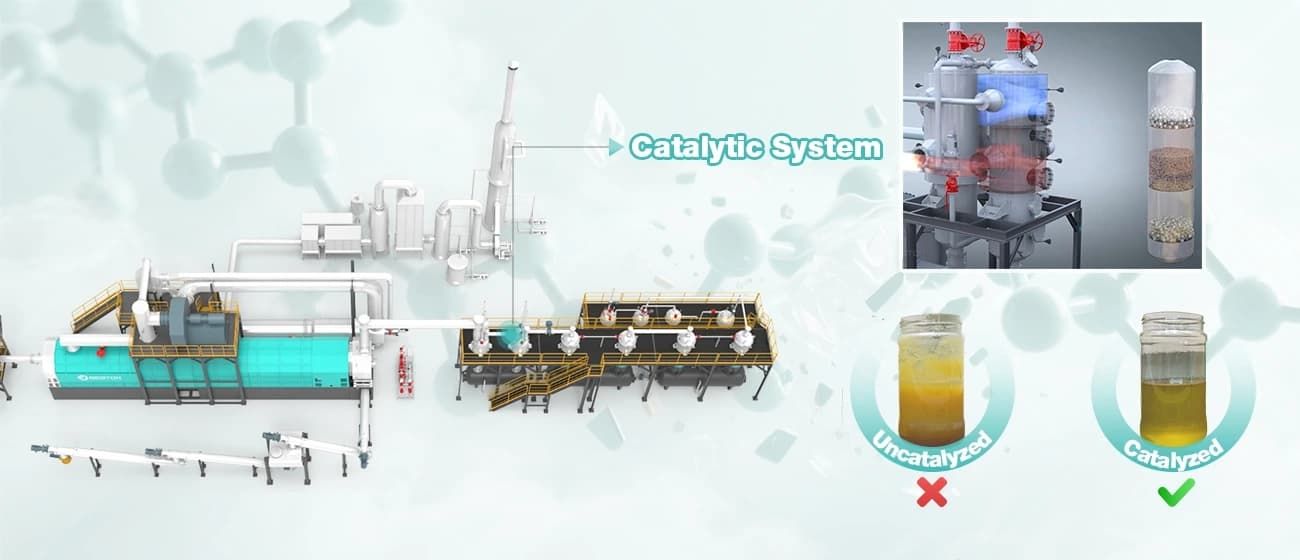
Vapor handling systems therefore play an important role. Efficient condensation equipment enables the recovery of condensable hydrocarbons while separating non-condensable gas for energy utilization.
The design of condensers, cooling systems, and gas pipelines influences heat transfer efficiency and can affect the composition of collected oil. Insufficient cooling may result in the loss of valuable hydrocarbons, while excessive cooling can increase operational complexity.
Role of Non-Condensable Gas
Non-condensable gas generated during pyrolysis contains combustible components that can contribute to process heating after suitable treatment. This internal energy circulation reduces dependence on external fuel sources and improves thermal efficiency.
Gas composition depends on feedstock type, reactor temperature, and operating conditions. Hydrogen, methane, and light hydrocarbons may be present in varying proportions. Their effective utilization can improve overall energy management within the plant.
For buyers comparing a plastic to oil machine for sale, the ability to recover and utilize process gas should be considered alongside reactor design and production capacity.
Formation and Management of Solid Residues
Solid residues represent the non-volatile fraction remaining after thermal decomposition. Their quantity and characteristics are affected by feedstock composition, operating temperature, and process stability.
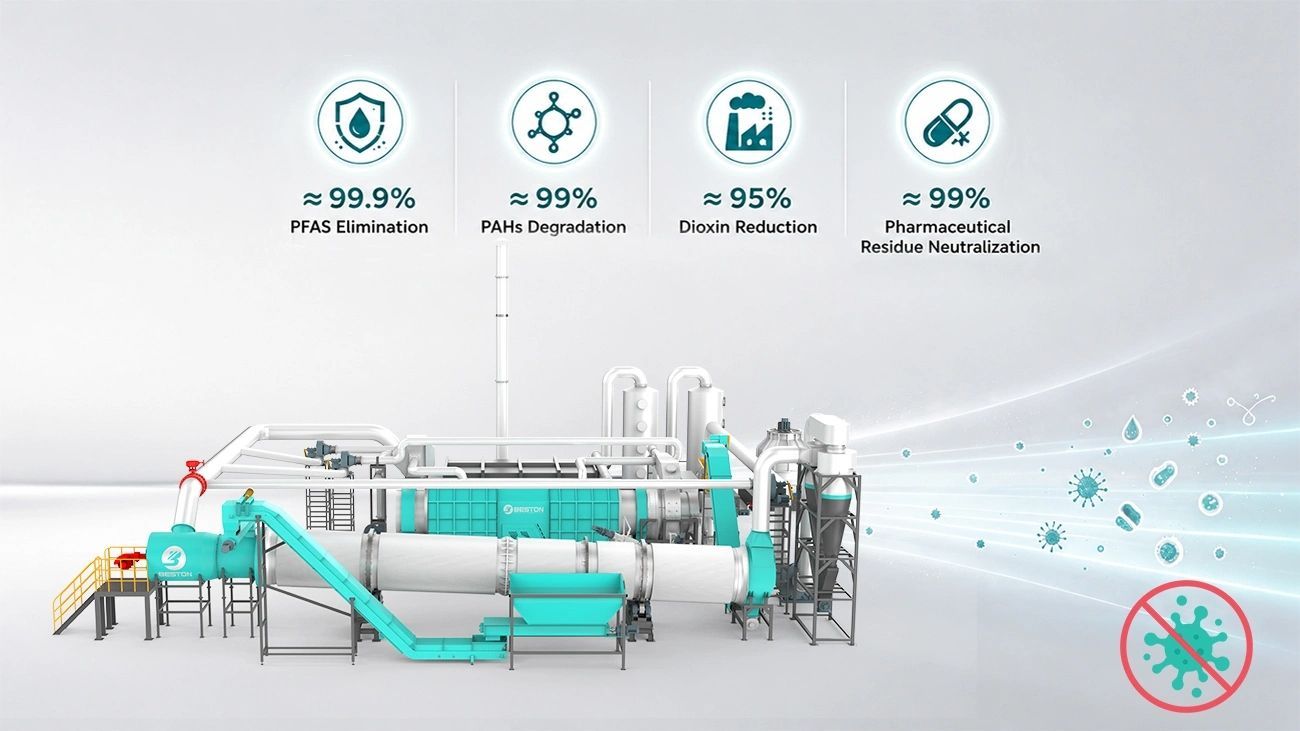
In plastic pyrolysis, residue may contain carbonaceous material, inorganic additives, pigments, fillers, and traces of contaminants. Excessive residue generation can indicate incomplete conversion or unsuitable feedstock preparation.
Residue handling systems therefore form an important part of plant design. Efficient discharge and collection support continuous operation while reducing maintenance requirements.
Integrating Quality Control into Plant Operation
Product quality does not depend on a single parameter. It results from the interaction of feedstock preparation, temperature management, residence time, vapor recovery, and residue control.
For companies evaluating a plastic to oil machine for sale, technical assessment should extend beyond nominal production capacity. Feedstock compatibility, thermal stability, condensation efficiency, gas utilization, and residue management all influence the consistency and value of final products.
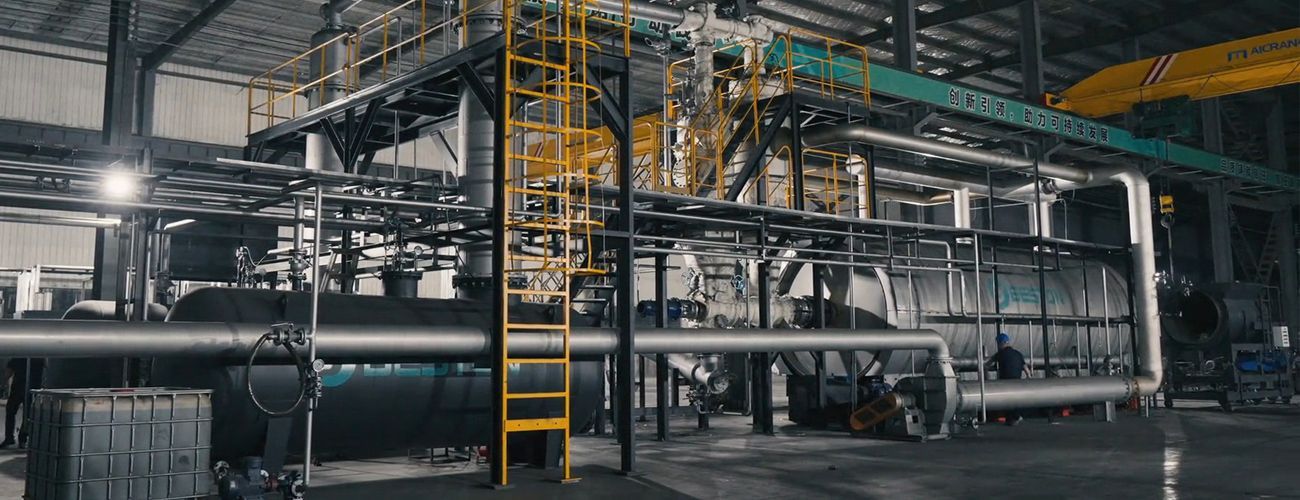
A well-designed pyrolysis system combines these elements into an integrated process. Stable operation, controlled reaction conditions, and effective product recovery can improve the quality of oil, gas, and solid residues while supporting more efficient resource utilization from plastic waste.