Tank Bottom Sludge vs. Refinery Sludge vs. Drilling Waste: How Feedstock Changes Your TDU Setup
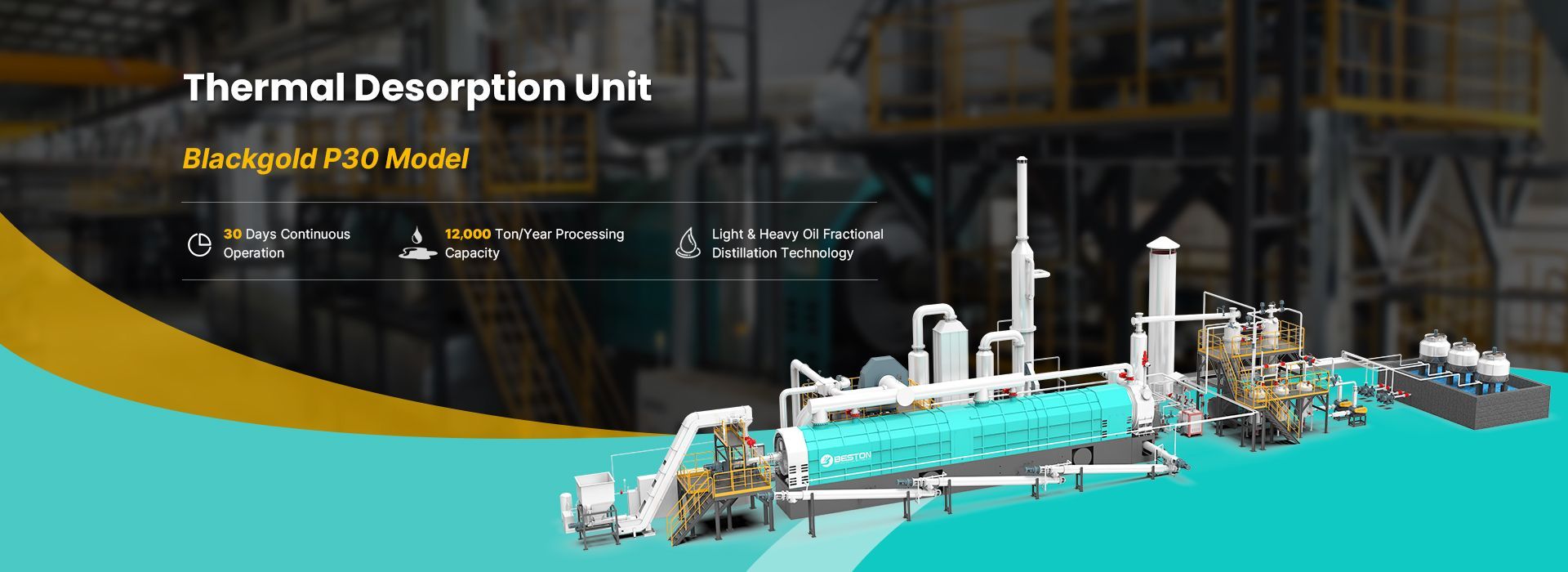
Thermal desorption is widely used to treat oily wastes and recover hydrocarbons from contaminated solids. However, not all oily waste behaves the same way during thermal treatment. Tank bottom sludge, refinery sludge, and drilling waste can have very different moisture levels, hydrocarbon contents, particle characteristics, and inorganic compositions.
These differences directly affect how a thermal desorption unit (TDU) should be configured. Choosing equipment based only on daily processing capacity can lead to inefficient heating, unstable feeding, excessive energy consumption, or difficulties with downstream vapor treatment.
Understanding the feedstock is therefore one of the first steps in designing an appropriate TDU system.
1. Tank Bottom Sludge: High Hydrocarbon Variability
Tank bottom sludge accumulates at the bottom of crude oil, fuel, and other hydrocarbon storage tanks. It typically contains a mixture of hydrocarbons, water, sediment, rust, and other solid contaminants.
Its composition can vary considerably depending on the stored material, tank operating history, and cleaning method. Some tank bottoms may contain a relatively high proportion of recoverable hydrocarbons, while others may contain large amounts of water and inorganic solids.
For a TDU system, this variability makes feedstock analysis particularly important. The heating system must provide sufficient energy to remove water and hydrocarbons without unnecessarily increasing the treatment temperature.
Feed handling is also important because sticky sludge can be difficult to transport. Mixing, dewatering, or other pretreatment may be required depending on its physical condition.
2. Refinery Sludge: More Complex Contaminants
Refinery sludge can originate from crude oil processing, wastewater treatment, separators, storage facilities, and other refinery operations. Its composition may include hydrocarbons, water, catalysts, mineral solids, and other process-related contaminants.
Because refinery sludge can come from different sources within the same facility, its properties may vary from one stream to another.
A thermal desorption unit designed for refinery sludge may therefore require greater flexibility in temperature control, feeding, vapor condensation, and gas treatment. Corrosive compounds should also be considered when selecting equipment materials and downstream components.
For larger projects, separating different sludge streams before treatment can make process control easier and provide more predictable operating conditions.
3. Drilling Waste: Water and Solids Become Critical
Drilling waste, including oil-based drilling cuttings, has a different physical structure from many tank or refinery sludges. It can contain rock cuttings, drilling fluids, oil, water, and various additives.
The solid content can be relatively high, and particle size may vary significantly. This affects feeding, heat transfer, and residence time inside the thermal treatment equipment.
Moisture is another major consideration. If drilling waste contains substantial water, a significant portion of the thermal energy supplied to the system may be consumed by water evaporation.
The TDU design therefore needs to account for both the hydrocarbon removal target and the energy required to heat and evaporate the water fraction.
4. Feedstock Changes the Heating Requirement
One of the most important differences among these feedstocks is moisture content.
Water requires substantial energy to heat and vaporize. Two systems processing the same mass of waste can therefore have very different energy requirements if their moisture levels differ.
Hydrocarbon content also affects the thermal balance. Volatile hydrocarbons released during treatment can be recovered through condensation, while non-condensable gases may potentially be used as part of the plant's heating system, depending on their composition and system design.
Consequently, the TDU should be sized according to the actual feed composition rather than simply using tons per day as the only design parameter.
5. Feeding and Material Handling Need to Match the Waste
Physical characteristics can be just as important as chemical composition.
Sticky tank sludge may require specialized feeding equipment. Refinery sludge may need mixing to maintain a relatively uniform feed. Drilling cuttings may require conveyors or other solids-handling equipment capable of dealing with abrasive particles.
Pretreatment can also influence overall plant performance. Removing excess water, breaking up large particles, or homogenizing the feed can improve heat transfer and make the thermal process more stable.
6. Vapor and Condensation Systems May Differ
The composition of vapors released during thermal treatment depends on the feedstock.
A hydrocarbon-rich sludge may generate substantial quantities of condensable oil vapors. Water-rich waste can produce a significant water vapor load. Other contaminants may require additional gas cleaning or treatment.
The condenser, oil-water separation system, non-condensable gas handling, and emission-control equipment should therefore be designed around the expected vapor composition.
This is particularly important when different waste streams are expected to be processed in the same TDU. A system designed around one feedstock should not automatically be assumed to perform identically with another.
7. Reactor Material and Wear Also Matter
Feedstock can influence equipment durability.
Drilling waste containing abrasive mineral particles may create greater mechanical wear than relatively soft sludge. Certain refinery and tank-bottom wastes may contain corrosive compounds that require appropriate material selection.
The reactor, feeding equipment, conveyors, seals, and other components should therefore be evaluated according to both chemical and mechanical conditions.
8. A Feedstock-Based TDU Design Approach
Before selecting a thermal desorption unit, operators should collect representative feedstock data, including:
- Moisture content
- Oil and hydrocarbon content
- Solid content
- Particle size
- Density
- Salt and mineral content
- Potentially corrosive compounds
- Daily and seasonal volume variations
This information can then be used to determine heating capacity, reactor throughput, residence time, feeding requirements, condensation capacity, and gas-treatment needs.
Conclusion
Tank bottom sludge, refinery sludge, and drilling waste may all be described as oily wastes, but they can behave very differently during thermal treatment. Tank bottom sludge often presents variability in hydrocarbon and sediment content, refinery sludge can contain complex mixtures of process contaminants, and drilling waste can introduce significant water, solids, and abrasion considerations.
For this reason, a thermal desorption unit should be designed around the specific characteristics of the feedstock. A successful TDU setup is not simply a matter of selecting the largest available capacity—it requires matching the heating system, feeding equipment, reactor configuration, condensation system, and emission controls to the waste being processed.