Emerging Growth Potential of Tire Pyrolysis Projects in Africa

Cathy Wang • November 24, 2025

Africa is witnessing a rapid surge in urbanization, motorization, and industrial expansion, which collectively generate unprecedented volumes of end-of-life tires. With limited landfill space and growing pressure to curb uncontrolled dumping and open-air burning, the region has begun turning toward technologically viable resource-recovery solutions. Among these, a modern pyrolysis plant has emerged as a strategic asset. It converts discarded tires into pyrolysis oil, carbon black, steel wire, and combustible gas—products with strong commercial traction in both local and export markets.

The scale of tire accumulation, combined with new environmental regulations, positions tire pyrolysis plant as a timely and profitable sector across the continent.

Robust Availability of Feedstock

End-of-life tires are abundant in Africa due to aging vehicle fleets, limited recycling infrastructure, and low entry barriers for imported second-hand tires. In nations such as Nigeria, Kenya, South Africa, Ghana, and Tanzania, millions of tires are discarded each year. This stable and inexpensive input stream offers a significant economic advantage.

Key Advantages

  • Minimal competition for feedstock supply
  • Lower collection costs compared with developed markets
  • Presence of informal waste aggregators who support continuous sourcing
  • Such conditions create long-term predictability for project developers seeking secure supply chains.
Expanding Markets for Pyrolysis-Derived Products

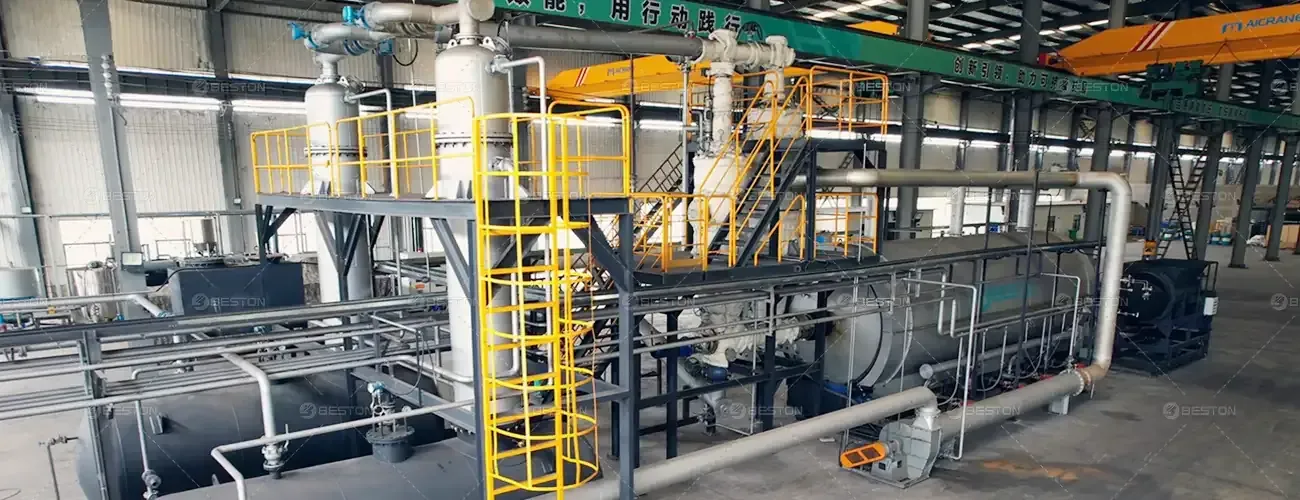
A tire-focused pyrolysis reactor generates multiple output streams that align well with Africa’s industrial needs.

Pyrolysis Oil

The region maintains robust demand for alternative fuels due to fluctuating crude oil prices and intermittent refinery operations. Pyrolysis oil serves as an effective substitute for furnace oil and industrial heating fuels in cement plants, textile mills, and small-scale manufacturers. In some regions, there is increasing interest in upgrading the oil into transport-grade fuel, further expanding its commercial scope.

Carbon Black

Locally produced recovered carbon black (rCB) offers cost advantages for rubber goods manufacturers. It is used in shoe soles, conveyor belts, hoses, and molded rubber parts—markets that are growing alongside Africa’s manufacturing base.

Steel Wire

Recycled steel wire can be sold to scrap metal buyers or mini steel mills. The market for scrap metal remains consistently strong due to infrastructure development projects.

These diversified revenue streams reduce financial volatility and enhance project resilience.

Growing Regulatory Momentum

Several African countries are enacting or revising environmental policies to control tire waste. Extended producer responsibility (EPR) frameworks, landfill bans, and incentives for recycling-oriented investment are gaining traction. This regulatory shift is not uniform across all regions, but the overall trajectory favors technologies that minimize environmental burden.

Government agencies increasingly view tire pyrolysis as a formal solution with measurable impact, encouraging private sector participation and foreign investment.

Competitive Cost Structure

Africa’s competitive advantages are significant. Land acquisition costs are generally lower. Labor is affordable. Energy expenditure—though sometimes inconsistent—can be stabilized through internal gas recovery from the pyrolysis plant, reducing dependence on external fuel sources.

Operating costs remain favorable compared with Asian and European markets, enabling faster payback periods when projects are strategically designed.

Increasing Foreign Investment and Technology Transfer

International investors and equipment manufacturers are recognizing Africa’s unexploited potential in tire recycling. Partnerships are emerging that combine local market knowledge with proven pyrolysis technology. Financing mechanisms through development banks, impact funds, and green transition programs further strengthen project feasibility.

Technology transfer elevates operational reliability, ensures emission compliance, and enhances product quality, enabling African producers to access higher-value export markets for pyrolysis oil and rCB.

Regional Challenges and Mitigation Pathways

Despite promising prospects, developers must account for logistical, infrastructural, and regulatory variability across regions. Unstable grid power, fragmented waste collection systems, and administrative delays can affect project rollout. Mitigation strategies include:

  • Building robust feedstock aggregation networks
  • Integrating on-site power generation using syngas
  • Securing long-term offtake agreements
  • Establishing transparent environmental reporting systems

Such measures elevate operational stability and strengthen investor confidence.
By Cathy Wang November 18, 2025
The management of oil-contaminated soil has become a critical environmental issue, particularly in areas affected by industrial operations, spills, and accidental discharges. Traditional soil remediation techniques often fall short in terms of efficiency, environmental impact, and cost-effectiveness. In contrast, thermal desorption presents a viable solution for addressing these challenges, offering a range of benefits in the restoration of contaminated sites. By utilizing a thermal desorption unit, the removal of oil contaminants from soil can be achieved effectively, ensuring a cleaner, safer environment and compliance with environmental regulations. Efficient Removal of Oil Contaminants One of the primary advantages of using a thermal desorption unit in the remediation of oil-contaminated soil is its efficiency in removing organic pollutants, particularly oils and hydrocarbons. The thermal desorption process involves the application of heat to soil, causing volatile contaminants, including oils, to vaporize. These contaminants are then captured, condensed, and separated from the soil, effectively purging the material of harmful substances. This method is particularly effective for dealing with soils contaminated by petroleum-based products, such as crude oil, diesel, and lubricating oils. It is ideal for large-scale cleanup operations where time is a crucial factor, as thermal desorption can process significant volumes of contaminated soil in a relatively short period. The precision and speed of this process ensure that oil residues are removed from deep within the soil matrix, something that traditional methods, such as bioremediation, may struggle to achieve.
By Cathy Wang November 12, 2025
As the world grapples with the escalating impacts of climate change, biochar, a form of carbon sequestration, has garnered attention for its potential role in mitigating greenhouse gas emissions. Biochar is produced through the pyrolysis of biomass, resulting in a stable form of carbon that can be stored in soils for centuries. The increasing focus on carbon removal technologies (CDR) has led to discussions about the role of biochar in future environmental policies. This article explores potential policy directions for biochar carbon removal, highlighting the key factors that could shape its future regulatory and market landscape. Growing Policy Support for Carbon Removal Technologies The importance of carbon removal technologies is becoming more apparent as governments worldwide aim to achieve net-zero emissions by mid-century. Policies are gradually evolving to incentivize methods like direct air capture (DAC), afforestation, and biochar production equipment . Governments and international organizations are expected to implement stronger regulatory frameworks to support CDR technologies, including biochar. In the context of biochar, a major driving force for future policies will be the potential for carbon credit systems and emissions trading. Carbon credits offer a financial mechanism to reward companies and projects that capture and store carbon, making biochar production economically attractive. If biochar is certified as an effective method of carbon removal, it could be integrated into carbon markets, where it can be traded as a verified credit, ensuring the long-term viability of biochar production.
By Cathy Wang November 11, 2025
Biochar has gained significant attention in recent years as a sustainable tool for soil improvement, carbon sequestration, and even renewable energy. But not all charcoal is considered biochar. The key lies in the conditions under which it is produced. Defining Biochar Biochar is a stable, carbon-rich material derived from biomass—such as agricultural residues, wood chips, or forestry waste—through a process called pyrolysis. Unlike ordinary charcoal used for cooking or fuel, biochar is specifically produced with environmental and agricultural benefits in mind. The Critical Conditions for Biochar Production 1. Temperature Control Biochar is typically produced at moderate pyrolysis temperatures, generally between 300°C and 700°C. Lower temperatures (under 300°C) may produce materials that are too volatile or unstable, while excessively high temperatures (over 700°C) can reduce the material’s nutrient content and adsorption capacity. 2. Limited Oxygen Environment To prevent complete combustion, pyrolysis must occur in an oxygen-limited or anaerobic environment. This ensures that the biomass carbon is retained in solid form, rather than being released as CO₂ or other gases. 3. Controlled Heating Rate The speed at which the biomass is heated affects the properties of the final biochar. Slow pyrolysis generally yields a higher fraction of solid biochar, whereas fast pyrolysis produces more liquid bio-oil and syngas. You can get some information in the biochar pyrolysis machine . 4. Biomass Quality The feedstock matters. Agricultural residues, wood, and organic waste are commonly used. Certain feedstocks may result in biochar with higher nutrient content or better soil amendment properties. Why These Conditions Matter The controlled production conditions ensure that the resulting biochar has the stability, porosity, and nutrient content necessary to improve soil fertility, retain water, and sequester carbon for long periods. Char produced under uncontrolled burning, such as forest fires or cooking fires, usually does not qualify as biochar because it lacks these beneficial properties. Conclusion In essence, not all charcoal is biochar. True biochar comes from biomass processed under controlled, oxygen-limited conditions at moderate temperatures, with a careful choice of feedstock and heating method. These conditions create a carbon-rich, stable material capable of delivering environmental, agricultural, and climate benefits.