Why Tire Shredding and Wire Drawing Are Critical for the Stability of Continuous Tire Pyrolysis Systems
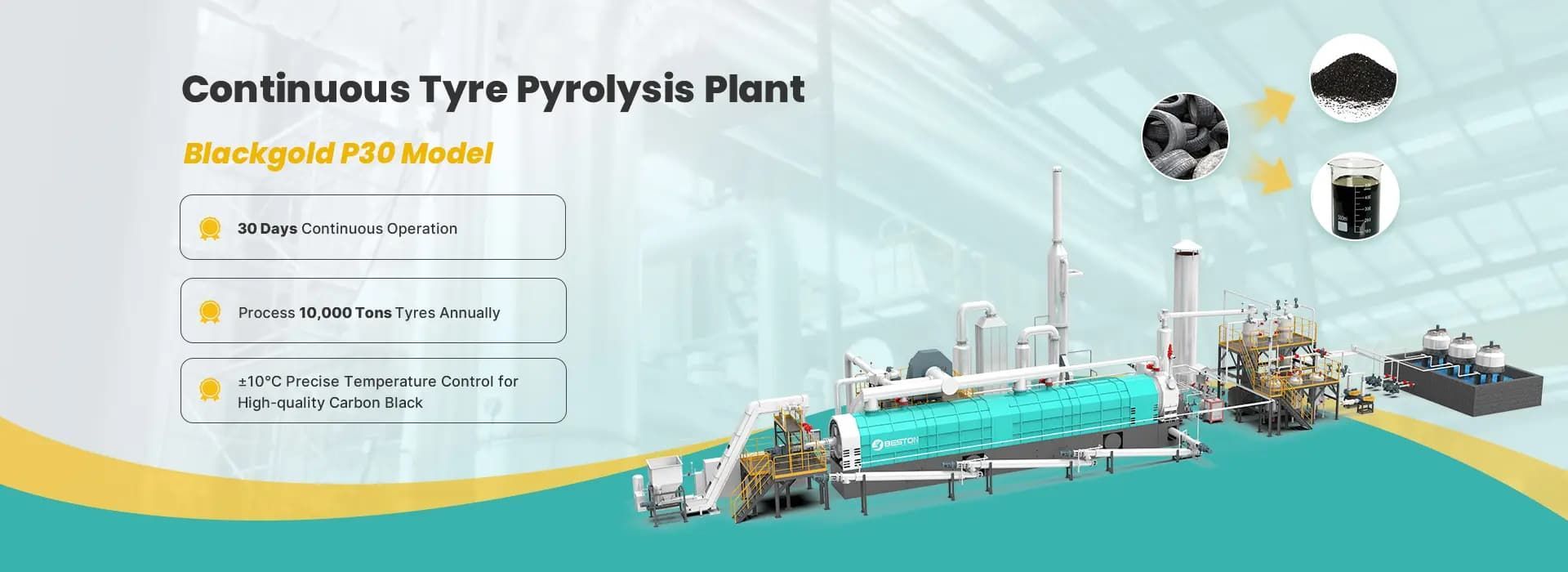
In continuous waste tire pyrolysis systems, the thermal reactor is designed to operate under stable feeding, heat transfer, and reaction conditions. Unlike batch pyrolysis equipment, continuous systems require a consistent and predictable feedstock stream to maintain long-term operation efficiency.
For this reason, waste tire shredding and steel wire removal (wire drawing) are not simply pre-treatment steps — they are key processes that directly determine the stability, efficiency, and product quality of the entire pyrolysis operation.
Proper size reduction and steel separation help ensure smooth feeding, uniform heating, reduced equipment wear, and improved recovery of pyrolysis products.
1. Tire Shredding Ensures Stable Continuous Feeding
Whole tires have irregular shapes, high elasticity, and complex structures, making them difficult to feed into a continuous pyrolysis reactor directly. The shredding process breaks waste tires into smaller and more uniform pieces, improving material handling performance.
Improved Feeding Consistency
Continuous pyrolysis systems rely on a stable material flow. Properly shredded tire chips can be transported more evenly through conveyors or screw feeders, preventing:
- Feeding interruptions;
- Material bridging or blockage;
- Uneven reactor loading.
A consistent feed rate allows the reactor to maintain stable operating parameters, including temperature and residence time.
Enhanced Heat Transfer Efficiency
Pyrolysis requires sufficient heat transfer from the reactor wall to the rubber material.
Large tire pieces may create uneven heating because:
- The outer surface heats faster than the inner structure;
- Rubber decomposition may become incomplete;
- Residence time requirements may increase.
After shredding, smaller tire particles provide a larger surface area, allowing heat to penetrate more efficiently and improving hydrocarbon release during pyrolysis.
2. Wire Drawing Protects Equipment and Improves System Reliability
Waste tires contain steel reinforcement wires, especially in truck and passenger vehicle tires. If excessive steel enters the pyrolysis reactor, it can negatively affect continuous operation. Steel wire removal before pyrolysis helps maintain equipment reliability.
Reducing Reactor Wear and Mechanical Stress
Steel wires are harder and more abrasive than rubber materials. During continuous operation, excessive metal content may cause:
- Increased wear on internal reactor components;
- Damage to feeding mechanisms;
- Higher maintenance requirements.
Removing steel in advance extends equipment service life and improves operational stability.
Preventing Material Flow Problems
In continuous reactors, smooth material movement is essential.
Long steel wires can:
- Wrap around rotating components;
- Cause feeding system blockages;
- Affect the movement of tire chips inside the reactor.
Wire drawing reduces these risks and allows rubber-based materials to flow more freely through the system.
3. Improving Pyrolysis Product Quality
Pre-treatment also directly affects the quality of recovered products.
Higher-Quality Pyrolysis Oil
Uniform tire chips enable more complete thermal decomposition, helping produce stable pyrolysis oil with consistent characteristics.
Cleaner Recovered Carbon Black
Excessive steel contamination may reduce the purity of recovered carbon black (rCB). Effective wire separation improves downstream carbon black processing and increases its potential value in industrial applications.
Efficient Steel Recovery
Separated tire steel can enter conventional metal recycling channels, creating an additional recovery stream.
4. Supporting Long-Term Continuous Operation
Continuous tyre pyrolysis plants are designed for industrial-scale waste tire processing. Unlike occasional treatment units, they often operate for extended periods with high throughput.
Stable operation depends on:
Feedstock Preparation → Continuous Feeding → Controlled Pyrolysis → Product Recovery
Among these stages, shredding and wire drawing create the foundation for reliable operation.
Without proper pre-treatment, even advanced pyrolysis equipment may face challenges such as:
- Fluctuating feed rates;
- Temperature instability;
- Reduced oil yield;
- Increased downtime;
- Higher operating costs.
Conclusion
For continuous waste tire pyrolysis systems, shredding and wire drawing are fundamental to achieving stable, efficient, and reliable operation.
Shredding creates a uniform feedstock that improves feeding performance and heat transfer efficiency, while wire drawing protects equipment, reduces operational risks, and improves the quality of recovered products.
As tire recycling moves toward large-scale industrial applications, effective pre-treatment will remain a critical factor in ensuring continuous pyrolysis systems achieve high availability, consistent output, and long-term economic performance.