
Continuous Pyrolysis Plant Operation: Process Stability and Production Management
Cathy Wang • November 17, 2026

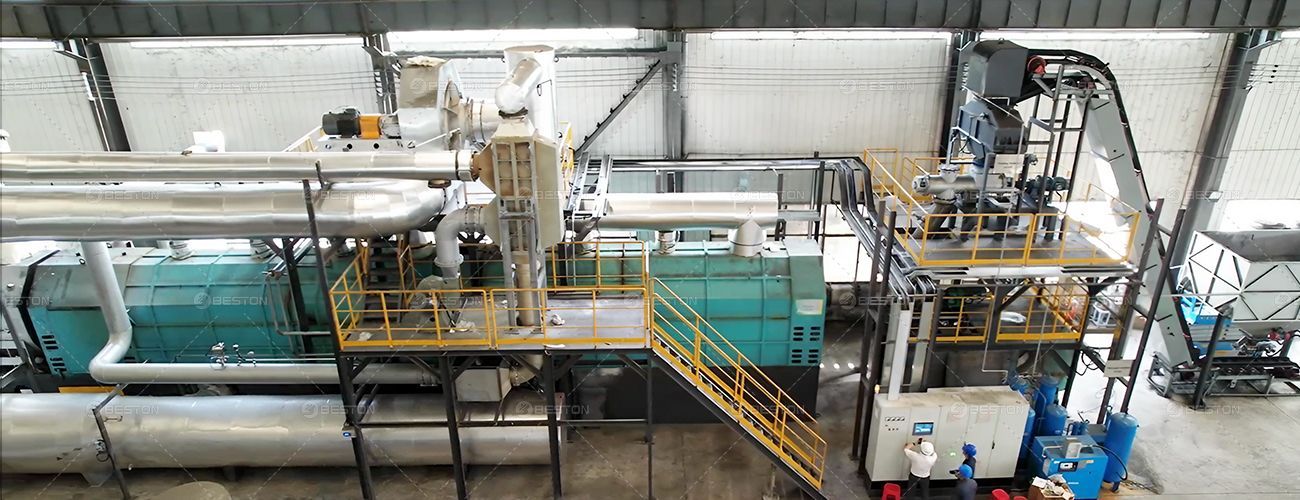
Continuous pyrolysis technology enables the sustained thermal conversion of waste materials into recoverable resources, including pyrolysis oil, combustible gas, and solid residues. Compared with batch processing, continuous operation places greater emphasis on coordinated material feeding, temperature regulation, vapor recovery, and residue discharge. Maintaining stable operating conditions is essential for achieving consistent product quality, maximizing equipment utilization, and controlling production costs. A fully continuous pyrolysis plant therefore requires integrated process management rather than isolated control of individual equipment components.

1. Feedstock Preparation and Continuous Feeding

Feedstock consistency is the foundation of stable pyrolysis operation in a fully continuous pyrolysis plant. Variations in moisture content, particle size, composition, and contamination levels can affect heat transfer, material movement, and thermal decomposition efficiency.

Before entering the reactor, raw materials should undergo appropriate pretreatment. Depending on the feedstock, this may involve sorting, crushing, screening, and drying. For waste plastic processing, removing unsuitable materials such as PVC and PET helps reduce undesirable chemical compounds and downstream treatment requirements.

The feeding system must also maintain a relatively consistent material supply. Fluctuating feed rates can disturb reactor temperature and residence time, resulting in uneven decomposition. Automated screw conveyors, sealed feeding devices, and coordinated material transfer mechanisms help maintain stable throughput while limiting air ingress.

2. Temperature Regulation and Thermal Stability

Temperature control is one of the most important aspects of continuous pyrolysis operation. Thermal decomposition involves complex chemical reactions, and different feedstocks require specific temperature conditions to achieve the desired product distribution.

Insufficient heating may cause incomplete decomposition, excessive wax formation, or residual unconverted material. Conversely, excessively high temperatures can promote secondary cracking, increasing non-condensable gas production and reducing liquid recovery.

Industrial systems typically integrate multiple temperature monitoring points along the reactor. Automated control systems adjust heating intensity according to operating conditions, helping minimize thermal fluctuations.

Heat distribution also deserves attention. Uneven heating can create localized temperature differences, affecting conversion efficiency and product consistency. Appropriate reactor configuration, material movement, and heat transfer arrangements help maintain a more uniform thermal environment.

3. Vapor Recovery and Byproduct Management

During pyrolysis, decomposed hydrocarbons leave the reactor as vapor and enter the condensation system. Efficient vapor transfer and cooling are essential for maximizing liquid recovery.

A properly configured condensation system separates recoverable liquid fractions from non-condensable gases. Multiple cooling stages can improve condensation performance across different hydrocarbon boiling ranges.

Pipeline temperature management is particularly important when processing plastic waste. Heavy hydrocarbon vapors may condense prematurely and form wax deposits, potentially restricting vapor flow. Suitable insulation, temperature monitoring, and pipeline configuration help mitigate this problem.

Non-condensable gases can also be collected and reused as supplementary heating fuel. This energy-recovery arrangement reduces dependence on external fuel and improves overall thermal utilization.

Solid residues require equally systematic management. Continuous discharge and controlled cooling prevent material accumulation and help maintain uninterrupted reactor operation.

4. Automated Monitoring and Production Management

A fully continuous pyrolysis plant relies on coordinated control across feeding, heating, condensation, and discharge systems. Automated monitoring improves operational visibility and helps operators identify deviations before they develop into production interruptions.

Important monitoring parameters include:

  • Reactor temperature: Maintains the required thermal conditions.
  • System pressure: Helps identify abnormal pressure fluctuations and potential blockages.
  • Feeding rate: Ensures consistent material input.
  • Vapor temperature: Supports effective transfer and condensation.
  • Discharge conditions: Prevents residue accumulation and operational instability.

Centralized control systems can integrate these parameters into a unified operating interface. Historical operating data also help identify recurring inefficiencies and support preventive maintenance planning.

However, automation does not eliminate the need for trained operators. Regular inspection and appropriate operating procedures remain essential for safe and reliable production.

5. Preventive Maintenance and Long-Term Reliability

Continuous operation places sustained mechanical and thermal demands on reactors, conveyors, pipelines, pumps, and sealing components. Wear, corrosion, carbon deposits, and thermal fatigue can gradually affect equipment performance.

Preventive maintenance should focus on critical components and potential failure points. Regular inspection of feeding mechanisms, reactor seals, condensation equipment, and gas pipelines helps identify deterioration before unexpected shutdowns occur.

Maintenance schedules should also account for feedstock characteristics. Materials with higher impurity levels or greater ash content may require more frequent cleaning and inspection.

Conclusion

Stable continuous pyrolysis operation depends on the coordination of feedstock preparation, thermal regulation, vapor recovery, automated monitoring, and preventive maintenance. Consistent material input and controlled reactor conditions help maintain product quality, while effective energy recovery and residue management improve operational efficiency. Integrating these elements into a unified production management system provides a foundation for reliable long-term operation and more predictable industrial output.
By Cathy Wang • November 9, 2026
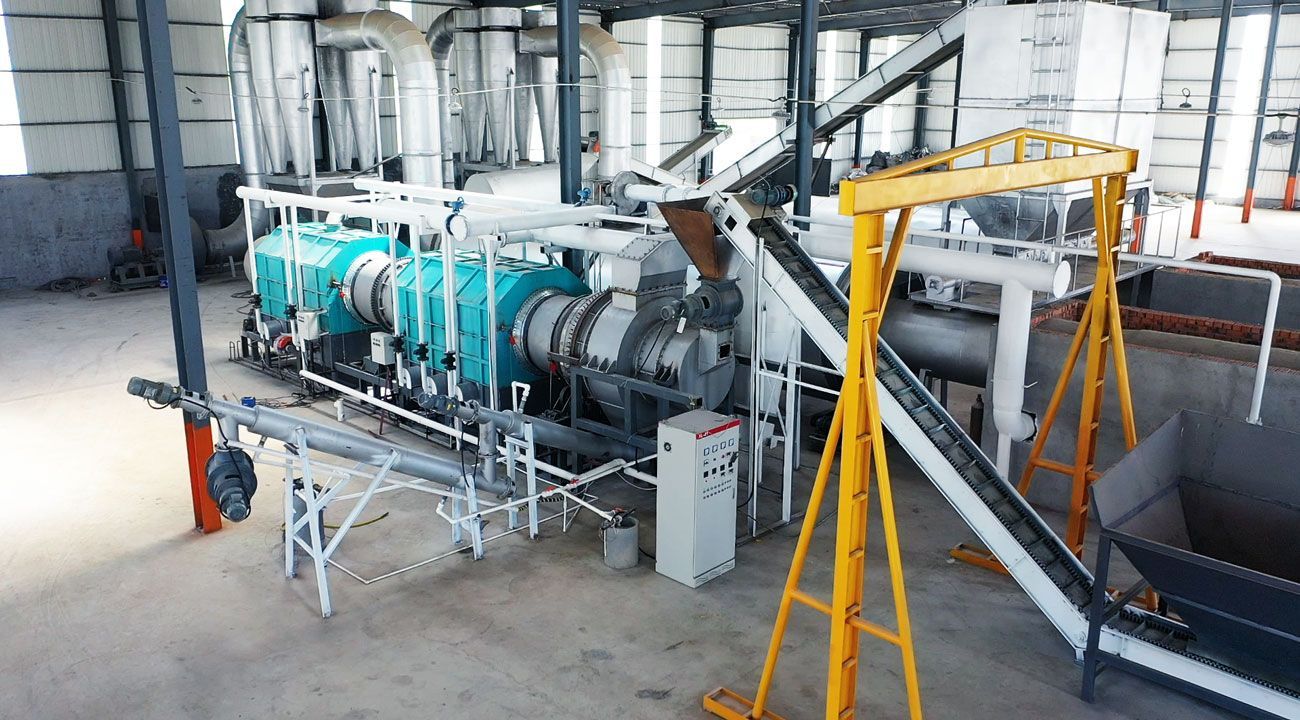
Investing in biochar production equipment requires more than evaluating the initial purchase price. The total project expenditure includes equipment procurement, installation, infrastructure preparation, energy consumption, labor, maintenance, and feedstock handling. These costs vary according to production capacity, biomass characteristics, pyrolysis technology, and operating schedules. A comprehensive cost analysis should therefore consider both capital expenditure (CAPEX) and operating expenditure (OPEX) to determine the economic feasibility of a biochar production project over its service life. 1. Initial Equipment Investment and Procurement Costs Equipment procurement typically represents a substantial proportion of the initial project investment. However, the purchase price of a biochar machine depends on several technical and commercial factors rather than production capacity alone. Key cost determinants include: Processing capacity: Larger systems generally require higher equipment investment because of increased reactor dimensions, feeding capacity, and auxiliary configurations. Reactor design: Rotary reactors, screw reactors, and other pyrolysis configurations differ in manufacturing complexity, thermal efficiency, and material requirements. Automation level: Automated feeding, temperature regulation, discharge, and monitoring systems may increase initial expenditure while reducing certain labor requirements. Emission treatment: Gas purification, dust collection, and exhaust treatment equipment contribute to procurement costs but are important for environmental management. Material specifications: Reactor steel grade, insulation materials, and high-temperature components influence manufacturing costs and expected service life. A bamboo charcoal machine , for example, may share certain thermal conversion principles with a biochar production system, but its configuration and operating parameters should reflect the characteristics of bamboo feedstock and the intended carbon product. Equipment specifications should therefore be evaluated against actual production requirements.  2. Installation and Supporting Infrastructure Equipment procurement is only one component of project investment. Installation and infrastructure preparation can significantly affect the overall capital budget. Site preparation may involve foundation construction, workshop development, electrical connections, water supply, and feedstock storage facilities. Additional expenses may arise from transportation, lifting equipment, mechanical assembly, and commissioning. Other infrastructure considerations include: Raw material storage and pretreatment areas. Biomass drying and size-reduction equipment. Fuel supply and electrical distribution systems. Finished biochar cooling, screening, and packaging facilities. Fire protection and environmental management installations. The availability of existing infrastructure can substantially reduce project expenditure. Conversely, remote installations or sites requiring extensive civil engineering may experience higher initial costs. 3. Energy Consumption and Feedstock Expenses Operating expenditure is influenced heavily by energy requirements and biomass procurement. Energy consumption depends on reactor configuration, feedstock moisture, operating temperature, insulation performance, and heat recovery efficiency. Wet biomass requires additional thermal energy for moisture evaporation before effective carbonization can proceed. Consequently, appropriate drying and feedstock preparation can help reduce unnecessary energy consumption. Some pyrolysis systems recover combustible gases generated during carbonization and reuse them as process fuel. This arrangement can reduce dependence on external energy sources after the system reaches stable operating conditions. Feedstock expenses also require careful assessment. Agricultural residues, forestry by-products, bamboo waste, and wood processing residues may have different procurement costs depending on local availability, transportation distance, and seasonal supply. For accurate budgeting, manufacturers should calculate feedstock consumption based on actual moisture content, bulk density, and expected biochar yield rather than relying exclusively on theoretical production figures. 4. Labor, Maintenance, and Replacement Costs Labor expenses depend on automation level, production capacity, and operational organization. Automated feeding and discharge systems can reduce manual handling requirements, although operators and maintenance personnel remain necessary for equipment supervision, inspection, and troubleshooting. Maintenance expenditure should also be incorporated into long-term financial planning. Typical maintenance activities include: Inspecting reactor shells, welds, and rotating assemblies. Replacing worn bearings, seals, and transmission components. Maintaining burners, pipelines, and gas treatment equipment. Cleaning material accumulation from feeding and discharge systems. Checking temperature sensors and electrical control components. High-temperature operation gradually affects refractory linings, insulation, and mechanical components. Establishing preventive maintenance schedules helps reduce unexpected equipment failures and associated production losses. 5. Evaluating Long-Term Operating Economics A reliable biochar machine cost analysis should distinguish between fixed and variable operating expenses. Several financial indicators can support investment decisions: Operating cost per ton: Total operating expenditure divided by annual biochar output. Capital cost per unit of capacity: Initial equipment investment relative to designed processing capacity. Payback period: The estimated time required for project cash flow to recover the initial investment. Equipment utilization rate: The proportion of available operating time during which the system produces biochar. These indicators should be calculated using realistic operating hours, production yields, and local energy prices. 6. Improving Investment Efficiency Through Equipment Selection Reducing the initial purchase price does not necessarily produce the lowest lifetime operating cost. Equipment reliability, thermal efficiency, automation, and maintenance accessibility can have a greater influence on long-term expenditure. A suitable selection process should consider feedstock availability, target production volume, site conditions, product specifications, and environmental requirements. Comparing equipment configurations against these parameters helps prevent overinvestment or insufficient processing capacity. Conclusion Biochar production economics depend on the interaction between initial equipment investment and recurring operating expenses. Procurement, installation, energy consumption, feedstock preparation, labor, and maintenance all contribute to total project costs. A comprehensive financial assessment should therefore extend beyond the equipment quotation and examine expected expenditure throughout the system's operating life. Selecting appropriately configured equipment and maintaining stable production conditions can improve resource utilization, control operating costs, and strengthen the long-term economic viability of biochar manufacturing.
By Cathy Wang • October 29, 2026
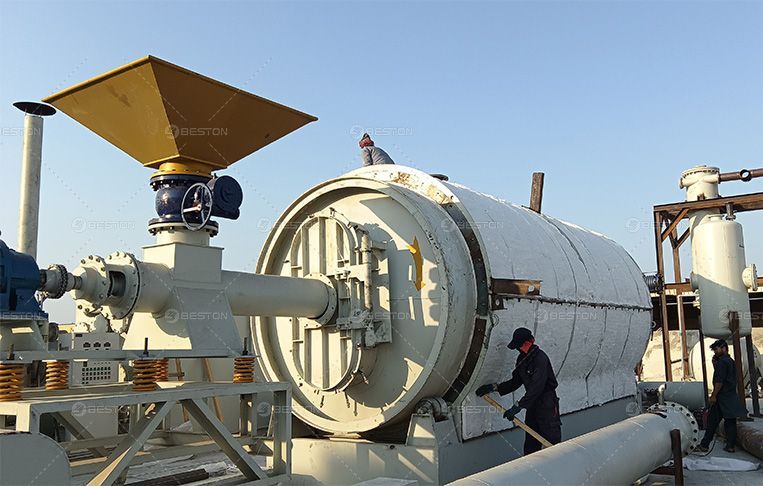
Installing a pyrolysis plant involves more than positioning the reactor and connecting auxiliary equipment. Successful commissioning requires coordinated mechanical assembly, utility integration, instrumentation verification, safety inspections, and performance testing. Each stage establishes the conditions for reliable operation and helps identify installation defects before commercial production begins. For a Beston pyrolysis plant , the installation plan should reflect the equipment configuration, feedstock characteristics, site infrastructure, and applicable local regulations. Equipment Assembly and Site Preparation Installation begins with a site-readiness assessment. The foundation must meet the equipment supplier's requirements for load-bearing capacity, levelness, anchoring, and vibration control. Access roads, unloading areas, lifting equipment, and maintenance clearances should also be confirmed before delivery. Once the equipment arrives, components are inspected against the packing list and technical documentation. Transport damage, missing parts, and deviations from approved drawings should be recorded and resolved before assembly proceeds. Mechanical installation typically covers the following systems: Main reactor: Positioning, alignment, anchoring, and verification of the drive or rotation mechanism where applicable. Feeding and discharge equipment: Installation of conveyors, feeders, sealing devices, and residue-handling components. Condensation system: Assembly of condensers, separators, pipelines, and associated cooling equipment. Gas handling: Connection of non-condensable gas lines, combustion equipment, and required treatment systems. Storage facilities: Installation of appropriate tanks, transfer lines, valves, and containment provisions for liquid products. Flange connections, seals, supports, and expansion allowances require particular attention. Thermal expansion can impose substantial mechanical stress during operation, especially where hot pipelines connect to relatively cool equipment. Assembly should follow approved engineering drawings rather than relying on visual alignment alone. Electrical Integration and Instrumentation Electrical and control-system installation establishes the link between mechanical equipment and process supervision. Motors, control cabinets, sensors, actuators, and protective devices must be connected and verified according to the electrical drawings and equipment specifications. Temperature sensors should be checked for correct placement, signal transmission, and calibration status. Pressure instruments, level indicators, flow meters, and gas detectors should undergo appropriate functional tests where installed. The programmable logic controller (PLC) and human-machine interface (HMI) should be checked for correct input and output mapping, alarm behavior, interlock logic, and operating sequences. Emergency stops and other protective functions require documented verification. These checks are essential. An instrument may display a plausible reading while transmitting an incorrect signal or responding too slowly. Functional verification helps identify such discrepancies before hot commissioning. Cold Commissioning and System Verification Cold commissioning tests equipment without introducing the full thermal load or conducting normal feedstock processing. Its purpose is to confirm mechanical readiness and verify that individual systems operate as intended. Typical activities include: Checking motor rotation, drive alignment, and conveyor movement. Verifying valve positions, pipeline connections, and cooling-water circulation. Testing control sequences, alarms, and emergency shutdown functions. Inspecting electrical protection and confirming instrument responses. Checking accessible joints and connections for leakage using approved methods. The commissioning team should record test results, unresolved defects, corrective actions, and approval status. Outstanding deficiencies affecting safety or equipment integrity must be addressed before the plant proceeds to hot commissioning. Hot Commissioning and Performance Testing Hot commissioning introduces thermal energy and establishes operating conditions under controlled procedures. Startup should follow the supplier's sequence for heating, gas handling, pressure management, and process stabilization. Once operating temperatures are established, suitable feedstock can be introduced according to the approved commissioning plan. Operators monitor temperature trends, pressure where applicable, gas flow, condensation performance, and discharge behavior. Abnormal fluctuations should be investigated rather than compensated for through arbitrary parameter changes. Performance testing then evaluates whether the plant meets agreed acceptance criteria. Relevant indicators may include: Feedstock throughput over a defined operating period. Liquid, gas, and solid product distribution. Specific fuel or energy consumption. Temperature stability and process continuity. Condensation performance and emissions-related measurements. Reliability of feeding, discharge, and auxiliary systems. Testing conditions must be documented, including feedstock composition, moisture content, operating hours, and measurement methods. These variables can materially affect results. Product yields should not be compared directly when feedstock properties or test conditions differ substantially. Documentation, Training, and Operational Handover Commissioning concludes with a structured handover. Essential records include approved drawings, equipment manuals, electrical schematics, calibration certificates, inspection reports, performance-test results, and maintenance schedules. Operators should receive practical training in startup, shutdown, routine inspection, alarm response, and emergency procedures. Spare-parts inventories and maintenance responsibilities should also be established before normal operation begins. A properly installed Beston pyrolysis plant depends on disciplined execution at every stage, from foundation preparation to performance verification. Systematic commissioning reduces avoidable startup problems, establishes a documented operating baseline, and provides evidence that the installed equipment performs according to the agreed technical requirements.
By Cathy Wang • October 26, 2026
Emission treatment is an essential component of a coconut shell charcoal machine, particularly when carbonization operates at commercial scale. Thermal decomposition of coconut shells generates particulate matter, condensable vapors, and combustible gases that require appropriate collection, treatment, or controlled combustion. The composition and volume of these emissions depend on feedstock moisture, carbonization temperature, reactor configuration, and operating conditions. An effective treatment system must address each emission stream while maintaining thermal efficiency, operational safety, and compliance with applicable environmental requirements. Dust Collection During Feedstock Handling and Charcoal Discharge Dust can arise during coconut shell crushing, screening, conveying, carbonization residue handling, and finished charcoal packaging. Fine particles may become airborne during material transfer, creating housekeeping challenges and increasing the risk of dust accumulation around mechanical equipment. Source capture is generally more effective than relying exclusively on general ventilation. Enclosed conveyors, covered transfer points, and appropriately positioned extraction hoods can limit the dispersion of particulate matter. Depending on particle characteristics and gas conditions, cyclones or bag filters may be incorporated into the dust collection system. Cyclones separate particles through centrifugal force and are often used as a preliminary collection stage. Bag filters capture finer particulates by passing gas through porous filter media. Their suitability depends on gas temperature, humidity, particle loading, and the potential presence of combustible dust. Several operating considerations are important: Temperature control: Gas entering a filter must remain within the filter media's permissible temperature range. Moisture management: Excessive humidity can cause particle agglomeration or filter blinding. Pressure-drop monitoring: Increasing pressure drop may indicate dust accumulation or restricted airflow. Fire prevention: Charcoal fines and hot particles require appropriate isolation, housekeeping, and fire-protection measures. Dust collection equipment should be selected according to the actual gas stream. Hot, dust-laden process gas may require cooling or preliminary separation before fine filtration. Managing Pyrolysis Vapors and Condensable Compounds During carbonization, the organic constituents of coconut shells decompose and release vapors containing water vapor and various organic compounds. As these vapors cool, some components condense into liquid fractions, while others remain gaseous. The vapor-treatment arrangement must account for this changing composition. In systems designed to recover condensable products, heat exchangers or condensers lower the vapor temperature, allowing suitable compounds to be separated from the gas stream. The resulting liquids may contain mixtures of water and organic substances, depending on the process configuration and feedstock characteristics. Uncondensed gases require further management. Sending untreated vapor directly to the atmosphere can result in odorous emissions and the release of organic pollutants. A properly engineered system may route combustible non-condensable gases to a controlled combustion chamber, provided that the gas composition, heating value, and operating conditions are suitable. Condensation performance depends on cooling capacity, gas flow, temperature, and the properties of the vapor mixture. Fouling can reduce heat-transfer efficiency, while inadequate condensate drainage may impair separation. Routine inspection and accessible cleaning arrangements are therefore important design considerations for a coconut shell charcoal machine . Combustion Gas Treatment and Heat Utilization Combustion gases are generated when fuel or recovered combustible gas is burned to provide process heat. Their composition depends on the fuel, combustion temperature, oxygen availability, burner design, and operating stability. Potential pollutants include particulate matter, carbon monoxide, nitrogen oxides, and other compounds associated with the feedstock and combustion conditions. Sulfur-containing compounds may also require consideration where relevant to the incoming material. Combustion control is the first line of emission management. Adequate mixing, appropriate residence time, sufficient oxygen, and stable temperature help promote more complete oxidation of combustible compounds. Secondary treatment may be necessary to meet site-specific emission limits. Depending on the measured emissions and applicable regulations, the treatment train may include particulate filtration, wet scrubbing, or other pollutant-specific controls. Wet scrubbers can remove certain soluble gases and particulates, but they generate wastewater that must be managed appropriately. Heat recovery can improve the thermal efficiency of a coconut shell charcoal machine. Suitable exhaust heat may be used for feedstock drying or combustion-air preheating, subject to temperature constraints, corrosion risks, and the requirements of the emission-control system. Heat recovery should not compromise adequate combustion or downstream pollutant removal. Monitoring and Integrated System Design Emission treatment performs most reliably when collection, condensation, combustion, and exhaust purification are designed as an integrated system. Poor coordination can create pressure fluctuations, inadequate gas flow, excessive condensation in unsuitable locations, or unstable burner operation. Temperature sensors, pressure gauges, gas-flow measurements, and periodic exhaust testing help operators identify deviations. Monitoring should focus on parameters relevant to the actual process and local environmental requirements. Maintenance schedules should address filter cleaning, condenser inspection, condensate removal, and combustion-system verification. Ultimately, emission management for a coconut shell charcoal machine requires more than installing a single filtration device. Dust, condensable vapors, and combustion gases have different physical and chemical properties, so each stream needs an appropriate treatment strategy. A coordinated design can reduce uncontrolled emissions, support stable carbonization, improve heat utilization, and strengthen the plant's environmental performance.