Engineering Barriers in Converting Rice Husk into Biochar

Cathy Wang • January 6, 2026

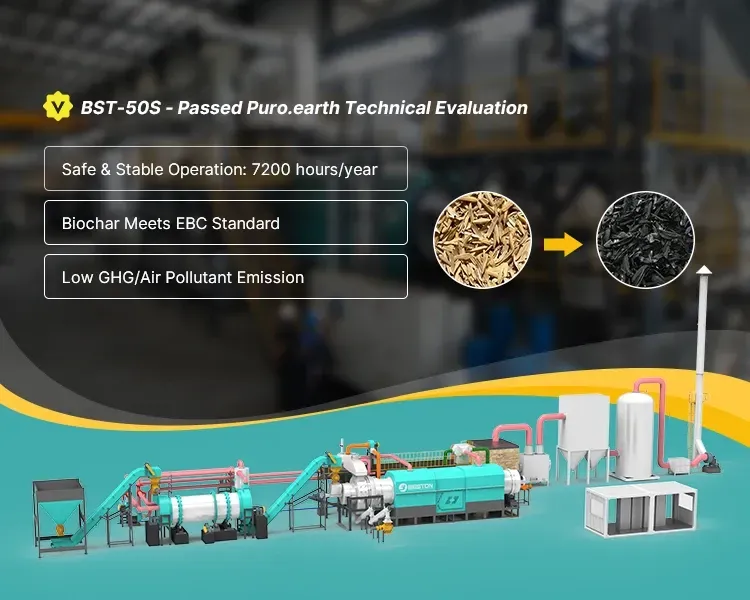
Rice husk is often presented as an abundant and underutilized biomass resource. In reality, transforming rice husk into stable, high-quality biochar introduces a series of technical challenges that are materially different from those associated with wood residues or agricultural stalks. These constraints are rooted in feedstock chemistry, physical morphology, and process control limitations within a rice husk carbonizer.

Feedstock Peculiarities of Rice Husk

Rice husk is not a conventional lignocellulosic material. Its most distinctive feature is its exceptionally high silica content, typically ranging from 15% to 25% by weight. This inorganic fraction is embedded within the husk’s epidermal structure, creating a rigid and abrasive matrix.

Such characteristics complicate mechanical handling. Conveyors, feeders, and screw systems experience accelerated wear. Attrition rates increase. Fine particulate generation becomes unavoidable. These issues translate directly into higher maintenance frequency and shorter equipment lifespans.

Bulk density presents another constraint. Rice husk is lightweight and voluminous. Storage, transportation, and feeding systems must be oversized relative to mass throughput. This inefficiency increases parasitic energy consumption before thermal conversion even begins.

Thermal Decomposition Complexity

The pyrolytic behavior of rice husk diverges from that of woody biomass. Hemicellulose and cellulose fractions decompose at predictable temperature ranges. Lignin, as expected, degrades gradually. Silica, however, remains thermally inert.

As organic matter volatilizes, silica concentrates within the solid phase. This leads to biochar with unusually high ash content. While ash is not inherently detrimental, excessive inorganic accumulation reduces fixed carbon yield and compromises downstream applications.

Heat transfer is also impaired. Silica-rich husk forms insulating layers during thermal treatment. Uneven temperature profiles emerge inside the reactor. Localized overheating may coexist with under-carbonized zones. Maintaining homogeneous thermal exposure becomes a non-trivial engineering task.

The body content of your post goes here. To edit this text, click on it and delete this default text and start typing your own or paste your own from a different source.

By Cathy Wang January 6, 2026
As the world grapples with the escalating issue of waste management and climate change, innovative solutions are becoming essential. Biomass carbonization, a process that turns organic waste into valuable biochar, is gaining traction as a sustainable method for managing solid waste. Paired with carbon credit trading, this technique can create new economic opportunities while addressing environmental challenges. In this article, we’ll explore how biomass carbonization combined with carbon credit trading can unlock additional revenue streams for solid waste resources and contribute to a more sustainable future. 1. What is Biomass Carbonization? Biomass Carbonization refers to the process of converting organic waste (such as agricultural residues, forestry by-products, and municipal solid waste) into biochar through pyrolysis. This is done in the absence of oxygen, using high heat to break down the organic material into carbon-rich products. Biochar production equipment is the key solution. Biochar, a stable form of carbon, has a variety of uses, including soil enhancement, water filtration, and carbon sequestration. 2. How Biomass Carbonization Contributes to Waste Management Waste-to-Value : Biomass carbonization offers an effective way to handle organic waste, diverting it from landfills and reducing methane emissions. Instead of accumulating in landfills, organic waste is transformed into a high-value product (biochar), which can be used for agricultural or industrial purposes. Sustainable Agricultural Practice : The biochar produced from biomass carbonization can be used to improve soil quality, enhance water retention, and increase crop yield. This makes it a valuable resource for farmers and agricultural industries, creating a market for the by-products of waste management. Energy Production : During the carbonization process, energy is released in the form of syngas (synthesized gas), which can be captured and used for generating electricity or heat, further increasing the economic viability of biomass carbonization. 3. What is Carbon Credit Trading? Carbon Credit Trading is a system where companies or organizations that reduce greenhouse gas emissions can sell carbon credits to other entities that are unable to meet their own emission reduction targets. One carbon credit represents the reduction of one metric ton of COâ‚‚ or its equivalent in other greenhouse gases. Carbon offset projects , like biomass carbonization, can generate carbon credits because biochar sequestration locks away carbon in the soil for hundreds to thousands of years, preventing it from entering the atmosphere. 4. How Biomass Carbonization Generates Carbon Credits Carbon Sequestration : Biochar, once created, is highly stable and can store carbon for long periods, preventing the release of COâ‚‚ into the atmosphere. This process qualifies as a carbon offset, allowing businesses involved in biomass carbonization to earn carbon credits for their efforts in reducing global warming potential. Certification of Carbon Credits : To participate in carbon credit trading, carbon sequestration projects must undergo a certification process with a recognized carbon standard (e.g., Verra, Gold Standard). These certifications ensure that the carbon offset is real, measurable, and permanent. 5. Unlocking Additional Revenue Streams through Carbon Credit Trading Revenue from Carbon Credits : By engaging in biomass carbonization and generating biochar, companies can earn carbon credits, which can then be sold on carbon credit exchanges. The price of carbon credits can vary depending on market demand and supply, but it provides an additional revenue stream for waste management or biomass businesses. Attracting Investment : The integration of carbon credit trading can make biomass carbonization projects more attractive to investors. By proving that their operations not only manage waste but also provide measurable climate benefits, companies can access funding and partnerships that might otherwise be unavailable. Encouraging Sustainable Practices : Carbon credit trading also incentivizes companies to adopt more sustainable practices. The ability to sell carbon credits for their emissions reductions creates a financial motive to further reduce environmental impacts, thus supporting the global transition to a low-carbon economy. 6. Real-World Examples and Case Studies Biochar for Soil Enhancement : Some agricultural companies in developing countries have partnered with waste management firms to produce biochar, which is then used to improve soil health. These companies have not only reduced the amount of waste going to landfills but have also earned significant revenue from carbon credits. Corporate Sustainability Projects : Large corporations with high carbon footprints are increasingly turning to carbon credit trading to meet their sustainability goals. Companies in sectors like agriculture, forestry, and energy are leveraging biomass carbonization as a tool for carbon offsetting, allowing them to reduce their emissions while contributing to waste resource management. Conclusion: Biomass carbonization and carbon credit trading represent a powerful combination of waste management and climate action. By converting organic waste into biochar and participating in the carbon credit market, businesses can not only manage waste more sustainably but also unlock new revenue streams. With the growing demand for carbon offset projects and the economic potential of carbon credits, biomass carbonization is poised to play a significant role in the global transition to a low-carbon economy.
By Cathy Wang December 29, 2025
The cost of a pyrolysis reactor is not a one-size-fits-all figure; it can vary widely based on several factors. Understanding these factors can help investors, businesses, and waste management companies estimate costs more accurately and make informed decisions. Here are the primary elements that affect the cost: 1. Capacity of the Pyrolysis Reactor The size and capacity of the reactor directly influence its cost. Larger reactors capable of processing more waste will naturally be more expensive. For example, a reactor designed to handle 1 ton of waste per day will cost significantly less than one that can process 10 tons or more per day. The larger the capacity, the higher the investment, but it may also offer a better return on investment (ROI) over time if the plant is designed to handle large volumes of waste. 2. Type of Feedstock The type of feedstock you plan to process can affect the design and cost of the reactor. Pyrolysis reactors can be customized based on the type of waste, whether it's plastic, tires, biomass, or other organic materials. Some feedstocks may require specialized reactors with unique features such as higher temperature capabilities or specific gas handling systems. Plastic pyrolysis reactors often need more advanced systems for handling different types of plastic, which could increase the overall cost. Tire pyrolysis reactors may require additional safety features and higher heat tolerance due to the complex nature of the material. 3. Technological Features and Automation Pyrolysis technology has advanced considerably, with newer reactors featuring automation, advanced temperature control, and integrated systems for product recovery. These technological upgrades can drive up the cost of the reactor. Some of the modern features that can increase costs include: Automated feedstock handling systems . Continuous vs. batch pyrolysis systems (continuous systems tend to be more expensive). Energy recovery systems that capture excess heat or gas for use in other processes. Advanced monitoring systems for real-time control and efficiency tracking. While these features increase the initial investment, they can improve the efficiency of the plant and reduce operational costs in the long run. 4. Materials Used in Construction The materials used to construct the pyrolysis reactor can also influence its cost. Reactors must be made from high-quality materials capable of withstanding the extreme temperatures (typically ranging from 400°C to 800°C) and corrosive byproducts of the pyrolysis process. Common materials used include: Stainless steel : This is highly resistant to corrosion and heat, but it can be expensive. Carbon steel : A more affordable option but may not last as long or perform as well at higher temperatures. Higher-quality materials ensure longer-lasting reactors with better performance but come with a higher price tag. 5. Location and Regulatory Requirements The location where the pyrolysis reactor is installed can affect the cost due to factors such as: Shipping and transportation costs : If the reactor has to be imported, this can add significant cost. Local regulations and compliance : In certain countries or regions, there may be stricter environmental regulations governing emissions and safety. Pyrolysis plants may need additional features or certifications to meet local laws, adding to the overall cost. 6. Installation and Maintenance The cost of installation and maintenance of the pyrolysis reactor should also be factored into the total cost. While reactors can be assembled onsite, this requires specialized labor, and the complexity of the installation process will vary depending on the reactor's design and capacity. Installation : Includes setup, calibration, and testing, all of which require skilled labor. Maintenance : Ongoing maintenance is crucial to ensure the reactor runs efficiently. Some reactors may require frequent maintenance due to wear and tear from high temperatures, while others with more advanced designs may have lower maintenance needs. Conclusion The pyrolysis reactor cost depends on a variety of factors, including its size, the type of feedstock it processes, technological features, and the materials used in its construction. While initial investment costs can be significant, the long-term benefits of reduced waste, energy production, and valuable byproducts make pyrolysis an attractive solution for sustainable waste management. As the industry grows and technology continues to evolve, the cost of pyrolysis reactors may decrease, making it an even more accessible and profitable solution in the years to come.
By Cathy Wang December 23, 2025
Cost control in plastic pyrolysis projects is not a matter of post hoc optimization. It is a structural discipline embedded in project design, procurement strategy, and operational governance. A pyrolysis plant that achieves technical feasibility but lacks cost containment logic will struggle to maintain margin under real market conditions. Unlike conventional manufacturing, plastic pyrolysis operates at the intersection of waste management and energy conversion. This dual identity introduces volatile inputs, heterogeneous outputs, and regulatory overhead. Effective cost control therefore requires a systems-level perspective rather than isolated efficiency measures. Capital Expenditure Rationalization Equipment Configuration and Scale Matching Capital expenditure sets the baseline for long-term cost behavior. Oversized plastic pyrolysis plant inflate depreciation and financing burden. Undersized systems constrain throughput and elevate unit cost. Reactor selection, condensation train complexity, and auxiliary systems must align with realistic feedstock availability and offtake certainty. Modular design often offers superior capital efficiency, enabling phased expansion rather than full-scale upfront commitment. Redundancy should be deliberate. Excessive redundancy increases cost without proportional risk reduction. Localization and Supply Chain Choices Imported equipment may offer higher nominal performance but often introduces long lead times, higher spare part cost, and dependency on external service providers. Localized fabrication and standardized components reduce lifecycle cost, even if initial specifications appear conservative. Feedstock Economics and Input Cost Control Feedstock Selection Strategy Feedstock cost frequently represents the largest variable expense or, in some regions, a potential revenue source through tipping fees. The challenge lies in balancing negative-cost feedstock with process stability. Highly contaminated plastics increase pretreatment cost, reduce oil quality, and accelerate equipment degradation. Low-contamination plastics improve yield but often command a purchase price. Cost control depends on defining an optimal feedstock envelope rather than maximizing either purity or acceptance fee. Pretreatment Cost Management Shredding, sorting, and drying are cost centers that scale with throughput. Energy-efficient shredders, gravity-based separation, and passive moisture reduction reduce recurring expense. Outsourcing pretreatment may reduce capital burden but often increases variable cost and reduces quality control. Energy Consumption Optimization Internal Energy Utilization Energy cost is a persistent pressure point. Non-condensable gas from plastic to oil machine provides a primary opportunity for internal energy substitution. Effective integration can offset a significant share of external fuel demand. Heat recovery from exhaust streams and hot solids further reduces net energy input. These measures require careful engineering but deliver sustained cost reduction over the operational lifetime of the plant. Thermal Loss Mitigation Insulation quality, heat exchanger efficiency, and temperature control precision directly influence energy intensity. Minor thermal losses compound over continuous operation. Cost control at this level favors incremental, cumulative improvements rather than single-point upgrades. Operating Expenditure and Maintenance Control Predictive Maintenance Frameworks Reactive maintenance is among the most expensive operational patterns. Unplanned shutdowns incur direct repair costs and indirect losses from downtime and contractual penalties. Condition-based maintenance, supported by vibration analysis, temperature trending, and corrosion monitoring, reduces lifecycle cost. Spare part standardization lowers inventory holding cost and accelerates repair cycles. Consumables and Wear Management Filters, catalysts, seals, and refractory materials contribute to steady-state cost. Selection based solely on purchase price often increases replacement frequency. Evaluating consumables on a cost-per-operating-hour basis yields more accurate control. Labor and Automation Balance Workforce Optimization Labor cost is not only a function of headcount but also of skill alignment. Overstaffing increases fixed cost. Understaffing increases incident risk and downtime. Targeted automation reduces routine manual intervention without eliminating human oversight. Control room centralization, automated feeding systems, and alarm rationalization enable lean staffing models while maintaining operational safety. Training as Cost Control Operator error is a hidden cost driver. Comprehensive training reduces process deviations, equipment misuse, and safety incidents. While training expenditure appears indirect, its absence manifests as recurring operational inefficiencies. Product Quality and Revenue Protection Quality Consistency as a Cost Lever Inconsistent product quality translates into price discounts, rejected shipments, and reprocessing cost. Maintaining stable reaction conditions and feedstock composition protects realized revenue. This is a cost control mechanism in effect, as revenue erosion increases effective unit cost even when nominal expenses remain unchanged. Market Alignment and Contract Design Offtake contracts with clear specifications reduce commercial friction. Flexible pricing mechanisms tied to reference markets mitigate downside risk. Poorly structured contracts externalize market volatility into the operating cost structure. Compliance and Environmental Cost Management Designing for Regulatory Stability Environmental compliance costs are often underestimated during project planning. Emission control systems, wastewater treatment, and monitoring infrastructure introduce both capital and operating expenses. Designing compliance systems for steady-state performance rather than peak theoretical loads avoids chronic oversizing. Automated reporting reduces administrative burden and enforcement risk. Avoiding Non-Compliance Penalties Fines, forced shutdowns, and retrofits represent the most expensive form of cost. Proactive compliance is therefore a defensive cost control strategy rather than a regulatory obligation.