Continuous Plastic Pyrolysis: Advantages, Applications and Operating Principle
Continuous Plastic Pyrolysis: Advantages, Applications and Operating Principle
Plastic waste has become one of the most challenging environmental issues worldwide due to its large volume, long degradation time, and limited recycling options. Traditional disposal methods such as landfilling and incineration can create environmental concerns and waste valuable resources. Continuous plastic pyrolysis has emerged as an advanced thermal conversion technology that transforms waste plastics into useful products, including pyrolysis oil, combustible gas, and carbon residue.
Compared with traditional batch pyrolysis systems, continuous plastic pyrolysis plants offer higher efficiency, stable operation, and better suitability for large-scale industrial applications. This technology provides a practical pathway for converting difficult-to-recycle plastics into valuable energy resources while supporting circular economy development.
What Is Continuous Plastic Pyrolysis?
Continuous plastic pyrolysis is a process that continuously converts waste plastics into hydrocarbon products under high-temperature conditions without oxygen. Instead of burning plastics, the process uses thermal decomposition to break long-chain polymer molecules into smaller hydrocarbon compounds.
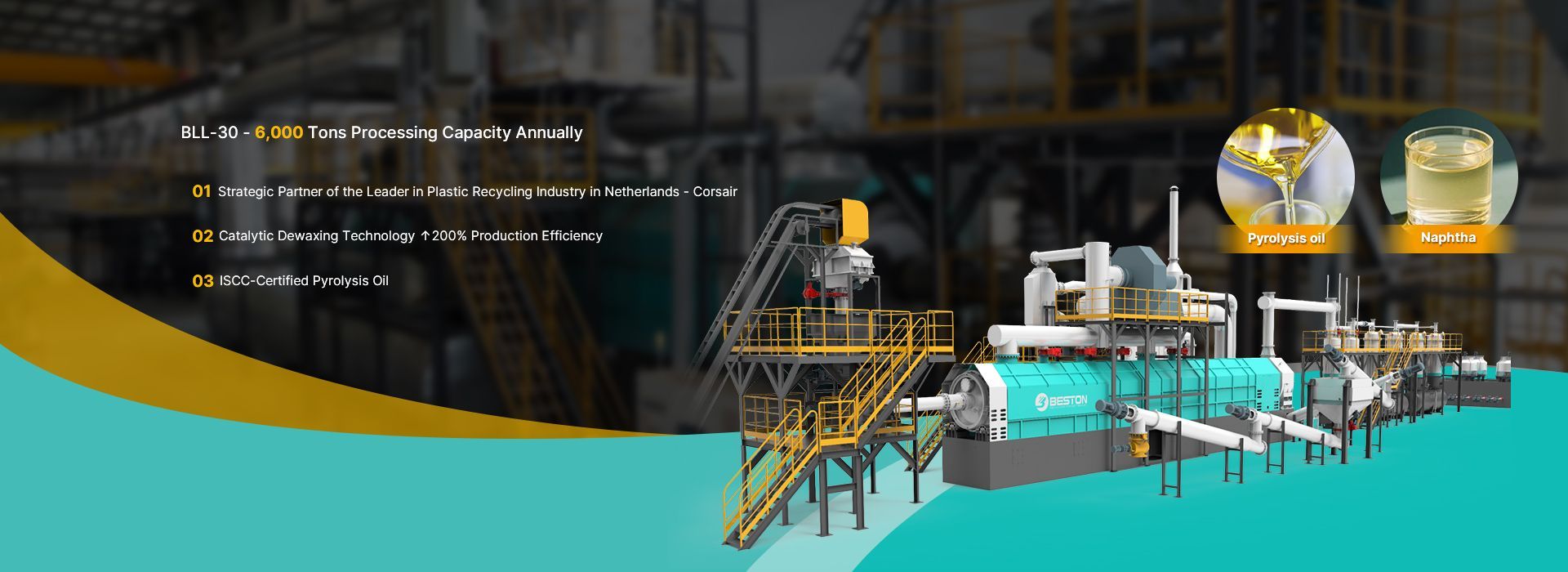
The system continuously feeds plastic waste into a sealed reactor, where heat causes the plastic molecules to crack and transform into oil vapor, non-condensable gases, and solid carbon materials. After cooling and separation, the oil vapor becomes liquid pyrolysis oil, while combustible gases can be recycled to provide heat energy for the pyrolysis process.
Unlike batch systems that require repeated feeding, heating, cooling, and discharging cycles, continuous pyrolysis equipment maintains a steady material flow, making it more suitable for commercial-scale plastic waste treatment.
Operating Principle of Continuous Plastic Pyrolysis
The continuous plastic pyrolysis process mainly includes several stages: feeding, thermal decomposition, gas separation, condensation, and product collection.
First, pretreated plastic waste is delivered continuously into the pyrolysis reactor through an automatic feeding system. Depending on the equipment design, plastics may be crushed, sorted, and dried before entering the reactor to improve processing efficiency.
Inside the reactor, the plastic material is heated in an oxygen-free environment. Under high temperatures, typically around 300°C to 700°C depending on plastic type and operating conditions, polymer chains such as polyethylene (PE) and polypropylene (PP) break down into smaller hydrocarbon molecules.
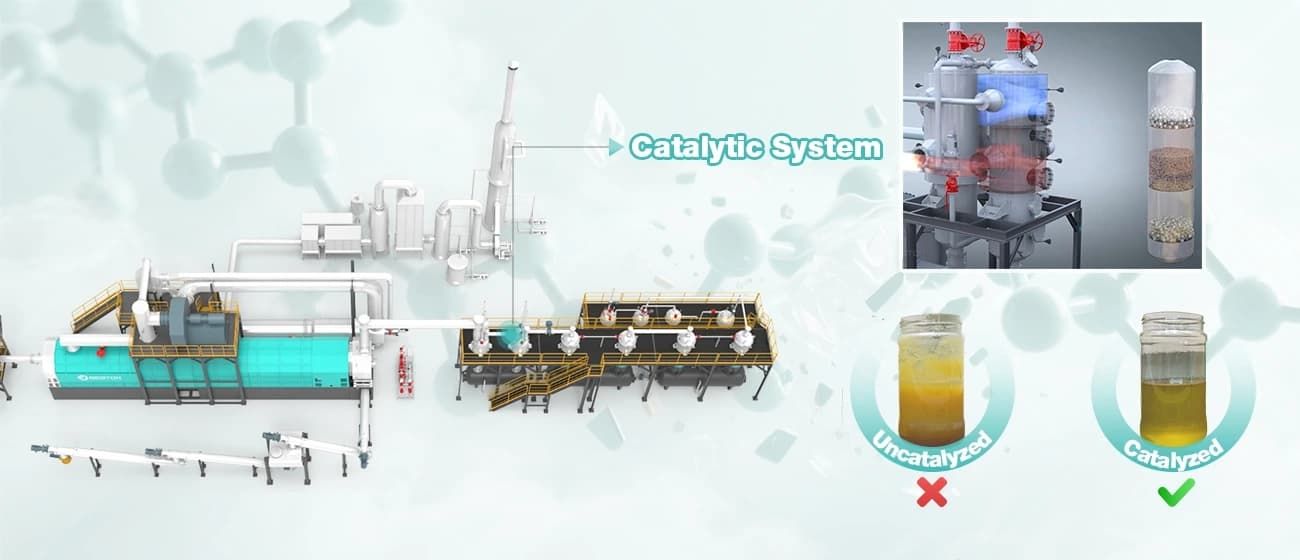
The generated oil vapor and gases then move through the gas purification and condensation systems. After cooling, condensable hydrocarbons are collected as plastic pyrolysis oil, which can be further refined or used as an industrial fuel. Non-condensable gases are usually recycled back into the heating system to reduce external energy consumption.
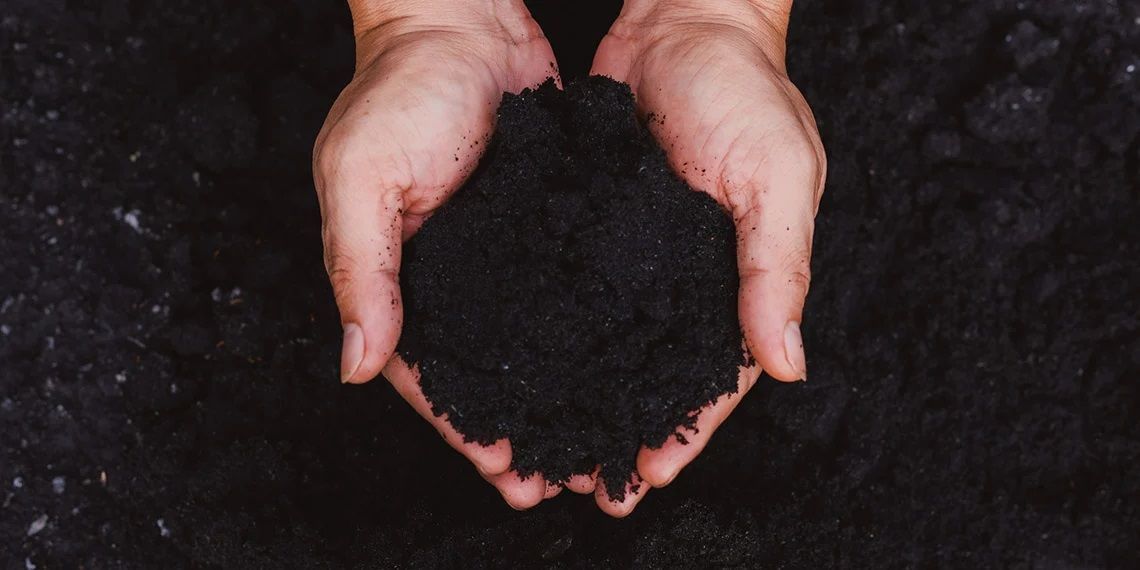
The remaining solid residue, mainly carbon-based material and impurities, can be collected for further treatment or utilization.
Advantages of Continuous Plastic Pyrolysis
1. Higher Processing Efficiency
One of the biggest advantages of continuous plastic pyrolysis is its ability to operate continuously. The system avoids frequent shutdowns required by batch processing, improving production efficiency and reducing labor requirements.
Continuous feeding and automatic discharge allow the equipment to handle larger quantities of plastic waste, making it suitable for municipal waste management companies, recycling facilities, and industrial-scale projects.
2. Stable Product Quality
Continuous operation provides more consistent temperature control and reaction conditions. This helps maintain stable production quality and improves the reliability of pyrolysis oil and gas output.
Compared with irregular batch operation, continuous systems can better manage variations in feedstock and maintain long-term production performance.
3. Lower Energy Consumption
Continuous pyrolysis plants can recycle the combustible gases generated during the process. These gases can be used as a heating source for the reactor, reducing dependence on external fuels.
The improved heat utilization efficiency helps lower operating costs and enhances the overall sustainability of the process.
4. Reduced Environmental Impact
Plastic pyrolysis provides an alternative solution for difficult-to-recycle plastic waste. Instead of sending plastics to landfills or uncontrolled disposal, pyrolysis converts them into valuable resources.
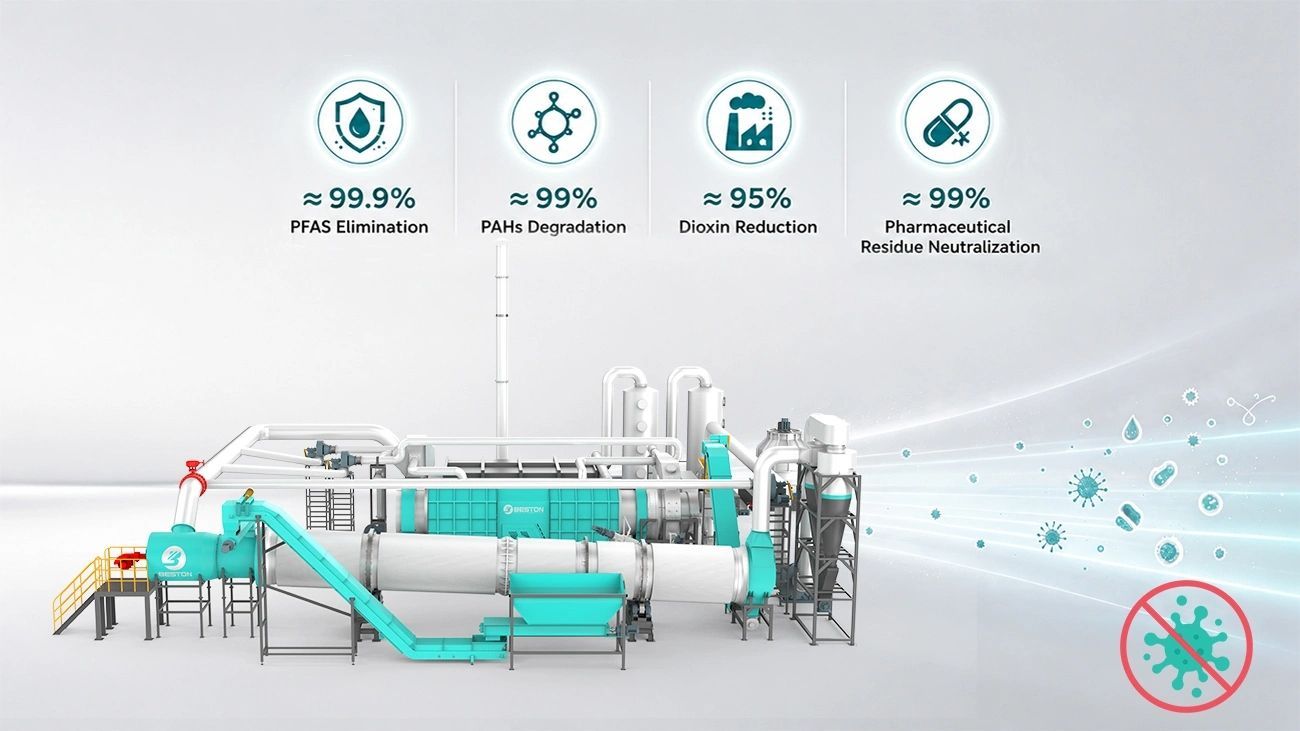
Because the process occurs without oxygen, it avoids direct plastic combustion and reduces the formation of harmful combustion-related pollutants. With proper gas cleaning and emission control systems, continuous plastic pyrolysis can meet environmental requirements for industrial applications.
Applications of Continuous Plastic Pyrolysis
Continuous plastic pyrolysis technology has a wide range of applications in waste management and resource recovery.
Waste Plastic Recycling
The primary application is processing mixed waste plastics, including polyethylene (PE), polypropylene (PP), polystyrene (PS), and other hydrocarbon-based materials. These plastics can be converted into pyrolysis oil and gas, providing an alternative resource for the petrochemical industry.
Production of Alternative Fuel
Plastic pyrolysis oil contains hydrocarbons with fuel characteristics and can be used as an industrial fuel after appropriate treatment. It can support industries such as cement production, boilers, and other thermal energy applications.
Chemical Feedstock Recovery
With further refining, plastic pyrolysis oil can serve as a feedstock for producing new chemical products. This creates a closed-loop recycling pathway where waste plastics are transformed back into valuable raw materials.
Integration with Circular Economy Projects
Continuous plastic pyrolysis supports the transition from a linear “produce-use-dispose” model toward a circular economy approach. By recovering carbon resources from waste plastics, companies can reduce dependence on virgin fossil resources and improve waste management efficiency.
Continuous vs Batch Plastic Pyrolysis
The main difference between continuous and batch pyrolysis systems is the operation mode. Batch pyrolysis requires periodic loading and unloading, which limits production capacity and increases downtime. Continuous pyrolysis uses automated feeding and discharge systems, allowing uninterrupted operation.
For small-scale projects or occasional waste treatment, batch systems may still be suitable due to their simpler structure and lower initial investment. However, for commercial projects requiring large processing capacity and stable output, continuous plastic pyrolysis systems provide significant advantages.
Future Development of Continuous Plastic Pyrolysis
As global plastic waste generation continues to increase, technologies that recover value from waste plastics are gaining attention. Continuous plastic pyrolysis is expected to play an important role in future waste management by combining waste reduction, energy recovery, and resource recycling. Advancements in reactor design, automation, emission control, and product upgrading will further improve the efficiency and economic performance of continuous pyrolysis plants.
By converting waste plastics into useful fuels and chemical resources, continuous plastic pyrolysis offers a promising solution for addressing plastic pollution while creating new opportunities for sustainable resource utilization.